Jasjit Singh: Understanding Moose Wala’s "SYL""SYL joins songs such as “295”, “Scapegoat”, and “Panjab”, in which Sidhu calls out the broken politics that have plagued Punjab since the creation of India - yet it goes even further."
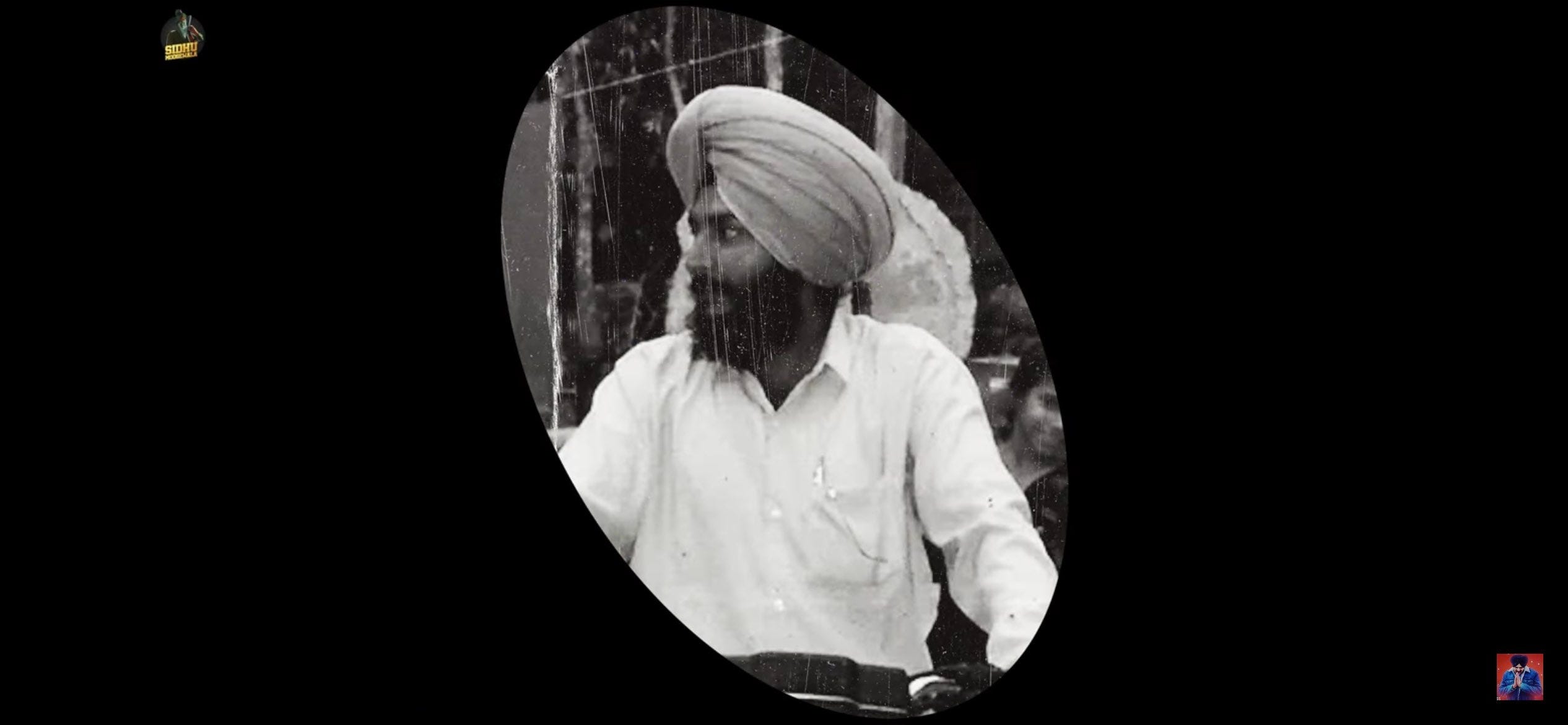
Jasjit Singh Today, Sidhu Moose Wala’s family released the much-anticipated song titled “SYL” and just like his other politically charged and socially conscious songs, this too does not disappoint. SYL joins songs such as “295”, “Scapegoat”, and “Panjab”, in which Sidhu calls out the broken politics that have plagued Punjab since the creation of India - yet it goes even further. In SYL, Sidhu’s pen begins to move more freely by providing details and context of the Sikh struggle, seemingly building on songs prior by taking a deep dive into the Indian state’s political and religious oppression against the Sikh community and Punjab as a whole. Before breaking down the song, which I will be doing below, it is worth briefly understanding what the SYL is and the background history related to it. SYL refers to the Sutlej Yamuna Link canal, a 214-kilometre canal authorized by the Indian state under former Prime Minister, Indira Gandhi, to divert Punjab’s water to other states - many of which were formed out of the state of Punjab. For context, Punjab popularly translates to “the land of five rivers.” In 1947, with the creation of India and Pakistan by the British, the formerly independent nation of Punjab was partitioned and split between the newly created countries. East Punjab became a part of India and included three of those five rivers: Ravi, Beas, and the Sutlej. Punjab’s economy was, and continues to be, dominated by agriculture. In 1966, amidst a struggle for greater Punjabi autonomy and language rights, Punjab was partitioned for a second time to create the Hindu-majority state of Haryana and the area of Chandigarh was shifted from Punjab and restructured as a union territory serving as the capital of both Punjab and Haryana. Shortly thereafter in 1971, the state of Himachal Pradesh was carved out of Punjab as part of a third partition. Man-made boundaries do not change the historical and natural landscapes of the region, and the new state of Haryana remained an agricultural state with water needs. However, it can be argued that Haryana’s need per area is still less than Punjab as evident through its agricultural production and population - especially given that Haryana receives allocations from the large Yamuna River, and Punjab does not (nor was Punjab ever consulted/considered.) In the late ’70s, then Prime Minister, Indira Gandhi, enacted President’s rule and suspended the assembly - arresting opposition leadership and thus ruling as a dictator. During this time, the newly formed Sikh majority state of Punjab began the Dharam Yudh Morcha or “righteous agitation” against Emergency Rule to secure the promises of increased autonomy offered to them in 1947. Under the banner of the Akali Dal Party, a Sikh political party, and successful community-based agitation thanks to the leadership of Sant Jarnail Singh Ji Khalsa Bhindranwale, alongside the rising support of the All Indian Sikh Students Federation (AISSF) under the leadership of Bhai Amrik Singh, the morcha fought to implement a list of demands outlined in a document by the name of the “Anandpur Sahib Resolution.” This resolution outlined a more autonomous Punjab and Sikh community, with the most important points being less interference from the central government in areas in which other states enjoyed independence, like the economy, and fair consideration of Sikhs in civil service. Despite the document endorsing Sikh principles while remaining a part of the federation of India, Indira Gandhi labelled the document and Sikhs as secessionists. Over 25,000 Sikhs courted arrest, and the people of Punjab became deeply suspicious of the federal government’s intention. Sant Jarnail Singh’s popularity grew exponentially during this time, and he made it clear to the people of Punjab that if these demands in the resolution were not met then the people of Punjab, especially Sikhs, would be cemented as slaves to the Indian state. It was clear that the main driving force of the morcha was to prevent the economic erosion of the state, and the SYL canal became a sticking point for riparian rights. As per international law based on riparian principles, Punjab’s water was being diverted to non-riparian states. Without water, all other points of contention for the morcha seemed meaningless. Yet, despite widespread protests, when the Congress Party regained federal power in 1980, as well as coming into power in Punjab that year as well, a deal was reached with Haryana and the desert state of Rajasthan to share Punjab’s waters from the Ravi, Beas, and Sutlej rivers. Known as the Indira Gandhi Award of 1981, this agreement stipulated that Rajasthan and Haryana would receive almost 75% of that surplus water, while Punjab would receive roughly 25% allocation. Of that 3.5 MAF (Million Acre feet) of water, Punjab was already providing 1.62 MAF to Haryana through the Bhakra canal system (Bhakra Dam). 40 years later, the water levels have depleted to a level at which Punjab has no surplus water to provide at all. In 1984, Indira Gandhi ordered the Indian Army to attack the Darbar Sahib complex. The Battle of Amritsar was the final straw. For many, the ShaheedI of prominent Sikhs leaders including Sant Jarnail Singh Ji Khalsa Bhindranwale and four decades of lies, deceit, and broken promises meant that secession was the only answer, and thus the struggle for Khalistan began. During the 1980s and 1990s, the Sikh struggle for Khalistan was overwhelmingly supported by the people of Punjab. The demands of the Anandpur Sahib Resolution had been immortalized with the death of Sant Ji, and water rights remained a key issue - especially given the prospect of an independent nation and the need to control the water and all the resources that came with it. During this time, the Indian State continued efforts to build the SYL canal, despite countless demands to stop the build. In July of 1990, Bhai Balwinder Singh Jattana, who is mentioned in the final verse of “SYL” and appears on the teaser image released yesterday, reached the SYL project head office in Chandigarh and assassinated the two chief engineers on the project. The SYL canal has been effectively halted ever since. In retaliation, and at the direction of Punjab Police officer, Sumedh Saini, Bhai Balwinder Singh’s entire family was burned to death by the state, including his five-year-old nephew. This same Sumedh Saini was later appointed DGP of the Punjab Police by Akali Dal Chief Minister, Parkash Badal. The same Akali Dal and Badal family, that had originally supported the Dharam Yudh Morcha and Anandpur Sahib Resolution. It is important to note that during the 1980s and 1990s hundreds of thousands of Sikhs were forced to take up arms against the state, as it sought to eliminate any visible Sikh identity from the state. The same officers sworn to protect citizens killed an estimated 150,000 Sikhs in what is remembered as the Sikh Genocide. Countless women were raped, and countless others were tortured in the most heinous ways. Sikhs were arbitrarily arrested and were sentenced to prison without due process. Many of them originally set to serve 10-15 years in jail continue to sit in jail today, over 30 years later. Sidhu took everything mentioned above plus more and turned it into a 4:09 minute lyrical and visual masterpiece. The music video begins with scenes from the Dharam Yudh Morcha, the insignia of the All Indian Sikh Students Federation (AISSF), and a clip of Sikh Scholar, Bhai Bharpur Singh Balbir, making his famous speech about Sikh sovereignty. Audio clips of that speech were used at the beginning of Sidhu’s “Panjab” song as well. From there, much of the music video follows the verses, as they show clips of the Battle of Amritsar, Sikhs protesting, Sikh freedom fighters, and more. I will attempt to break down the meanings of each verse while acknowledging that much often gets lost in translation, especially in music.  VERSE 1 In verse one, he acknowledges the Khalistan movement, in seeking sovereignty and the return of the lands stolen from Punjab by the Indian state through “re-organization” in 1966. “Give us back our culture and land, give us back Chandigarh, Haryana, and Himachal.” “Until [the Indian State] gives us a path to sovereignty, you can forget about receiving any of [Punjab’s] water, we won’t even give up a drop.” VERSE 2 In verse two he honors Sikh freedom fighters that gave their lives and those who continue to languish in jail well beyond their prison sentence. The accompanying visuals from the music video specifically show Bhai Balwant Singh Rajoana and Akal Takht Jathedar Bhai Jagtar Singh Hawara in handcuffs. “Who were the heroes and who were the terrorists? present your proof. At least now, release Sikh political prisoners.” “Until you remove the handcuffs, you can forget about receiving any of [Punjab’s] water, we won’t even give up a drop.” VERSE 3 In verse three he gives a quick acknowledgment to the writer, as is common in Punjabi songs. That writer is Sidhu himself. The important part of this verse is the reference to the “topi” or hat which is synonymous with Jawaharlal Nehru, leader of the Congress party, and first Prime Minister of India, who was always seen wearing one. It is important to note that saying “topi” is not a reference to the Hindu faith. In fact, Sant Jarnail Singh Ji Khalsa Bhindranwale famously referred to the ruling Congress Party as “topi valey.” Topi is also a common headgear for Brahmins and is a reference to the political and religious oppression carried out by Brahmanism against Sikhs and “low-caste” Hindus. “You think you’re bigger/better than us, but you’re not because your intentions are small/evil. Why do you (Congress Party leaders/Brahmin leadership]?” “Moosewala says that without asking, we don’t provide advice.” VERSE 4 In Verse four, he provides an ode to the recently passed Sikh leader Deep Sidhu, who had an influential role in the Farmers’ Protest and uplifting the voice for Sikh sovereignty and helping raise the Sikh nation’s flag at the Red Fort in Delhi. Deep Sidhu was labelled a traitor by some circles, and here Moosewala calls for weeding out the true traitors of the community. “Neither here nor there, people only seek their own benefit. If the Nishan Sahib flew [atop the Red Fort] why did these so-called proud Punjabis complain?” “Until we get our hands on these traitors, you can forget about receiving any of [Punjab’s] water, we won’t even give up a drop.” VERSE 5 In verse five, Sidhu gives a nod to the strength and kindness of the Sikh community in this matter. That even with all the sellouts to the Central Government, Punjab will resist. Sidhu clearly asserts Punjab’s ownership of its water, simply saying that Punjab will gladly give the clothes off its back to anyone when needed but it will not have anything forcibly taken. “What is water? It flows under the bridges. You can try to infiltrate us, but we will not cave to your pressure.” “You [don’t ask] you demand it, that’s why we don’t give [water] to you, you can forget about receiving any of [Punjab’s] water, we won’t even give up a drop.” VERSE 6 In his final verse, Sidhu says that the pen of revolution will not stop, and songs like this will continue to be released. If the oppression does not stop, then the Bhai Balwinder Singh Jattana will return. Sidhu calls for the Sikh community to rise and speak up against these injustices. “The pen will not stop; song after song will be released. If [the Indian state] doesn’t stop, then Balwinder Jattana will come back. The sons of Punjab have stopped the flow already.” “You can forget about receiving any of [Punjab’s] water, we won’t even give up a drop.” CONCLUSION The video ends with a speech from a Haryana Jat community leader speaking about how the Sikh community will never truly forget the attack on the Akal Takht and Darbar Sahib Complex, and their patience must not be tested. He mentions how the Sikh community avenged the attack by assassinating Indira Gandhi and General Vadiya, and how General Dyer was killed in London [by Udham Singh] for his attack on the Jallianwala Bagh. We do not know if there are other songs in the vault, but we can only hope that these songs bring about the political will of the community and that other singers and leaders rise to the occasion. The music video ends by stating that: “Each one of you is the last hope for protecting the Punjab River Waters to prevent Desertification of Punjab.” And the prevention of such would be the greatest tribute to Sidhu and all those who came before him, in speaking up and fighting for Punjab. #SavePunjabWaters #FreeSikhPrisoners Jasjit Singh is an attorney, and resides in California. He is the Director of Programs at California ChangeLawyers, and currently serves as the Board President for Jakara Movement. He is particularly passionate about Sikh & Punjabi history, civil rights, and racial justice. Views expressed are his own. You can find him on Twitter at @JasjitSinghD1. Baaz is home to opinions, ideas, and original reporting for the Sikh and Punjabi diaspora. Support us by subscribing. Find us on Twitter, Instagram, Facebook, and TikTok at @BaazNewsOrg. If you would like to submit a written piece for consideration please email us at editor@baaznews.org.
You’re a free subscriber to Baaz. For the full experience, become a paid subscriber. © 2022 Baaz
|
Jasjit Singh: Understanding Moose Wala’s "SYL"
09:05
0