Hello! Iceland has become the first country to declare a climate-related issue as a national security risk. What prompted such an escalation? Iceland deems the potential collapse of a major Atlantic Ocean current system as a national security concern and an existential threat which will enable its government to strategize for worst-case scenarios, according to the country's climate minister. Let's unpack what's going on in Iceland before checking in on COP30. Also on my radar today: |
|
|
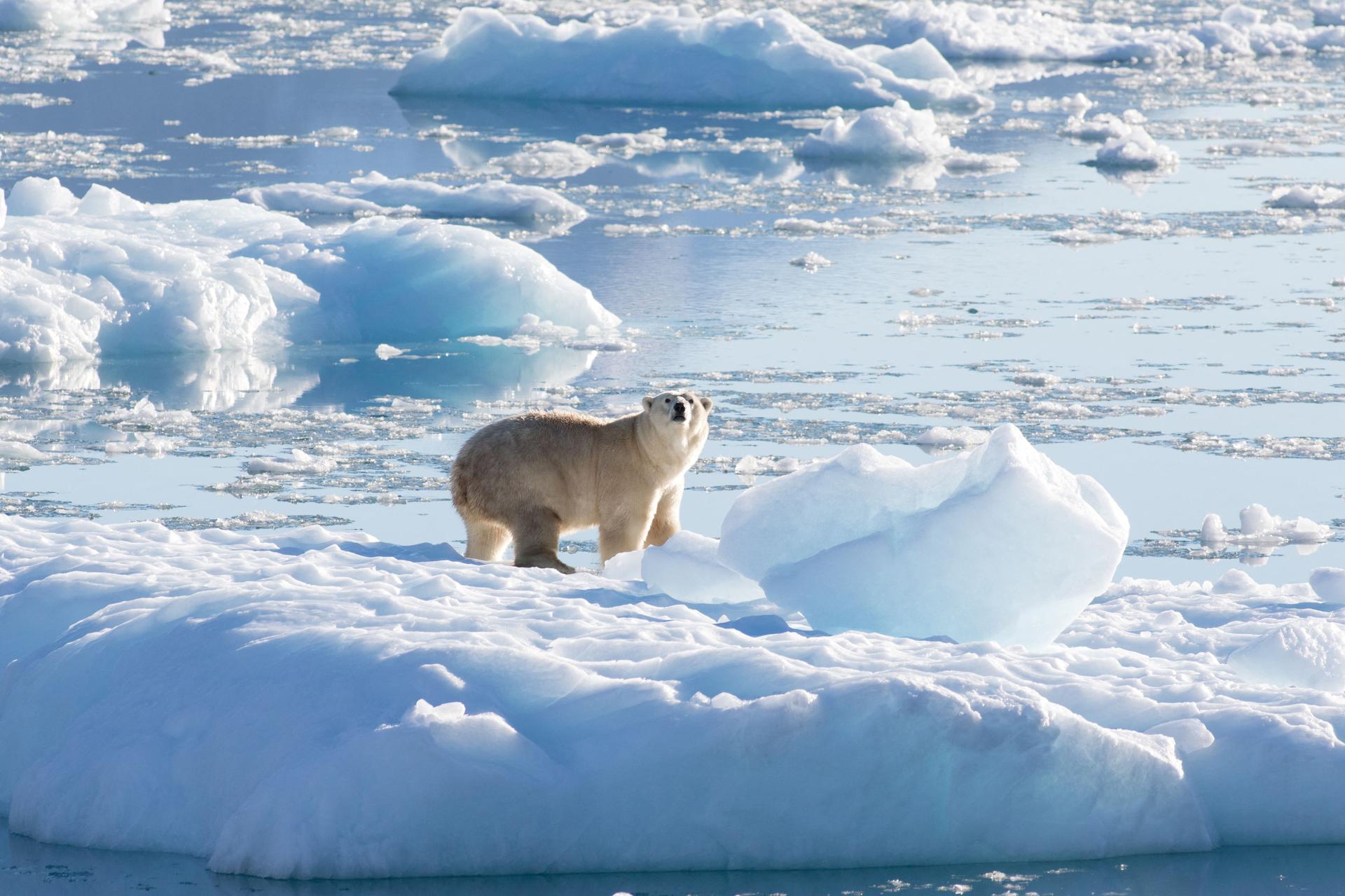
A southeast Greenland polar bear on glacier, or freshwater, ice is seen in this handout photograph. Thomas W. Johansen/NASA Oceans Melting Greenland/Handout via REUTERS |
The Atlantic Meridional Overturning Circulation (AMOC) brings warm water from the tropics northward toward the Arctic, and this helps keep Europe's winters mild. But as warming temperatures speed the thaw of Arctic ice and cause meltwater from Greenland's ice sheet to pour into the ocean, scientists warn the cold freshwater could disrupt the current's flow. A potential collapse of AMOC could trigger a modern-day ice age, with winter temperatures across Northern Europe plummeting to new cold extremes. The AMOC has collapsed in the past – notably before the last Ice Age that ended about 12,000 years ago. "It is a direct threat to our national resilience and security," Iceland's Climate Minister Johann Pall Johannsson said by email. "(This) is the first time a specific climate-related phenomenon has been formally brought before the National Security Council as a potential existential threat." An Atlantic current collapse could have consequences far beyond Northern Europe. It could potentially destabilize longtime rainfall patterns relied upon by subsistence farmers across Africa, India and South America, according to scientists. One of the first areas to be impacted by melting glaciers and shrinking snow cover is Alpine skiing and snowboarding. Click here for a Reuters story on how the CEO of the International Ski and Snowboard Federation and other winter sports athletes are driving the message about the need to address climate change. |
|
|
It's been a bit of a quiet COP30 climate summit in Brazil, aside from the protests which you can find out more about in today's 'Talking Points'. One of the only other developments was California Governor Gavin Newsom who lambasted U.S. President Donald Trump's "dumb" decision to reverse the federal government's course on climate action. He also said California would continue to prioritize green technology. We've also got a brief breakdown on why the World Bank and other multilateral development banks are under pressure to offer more help to poor countries. |
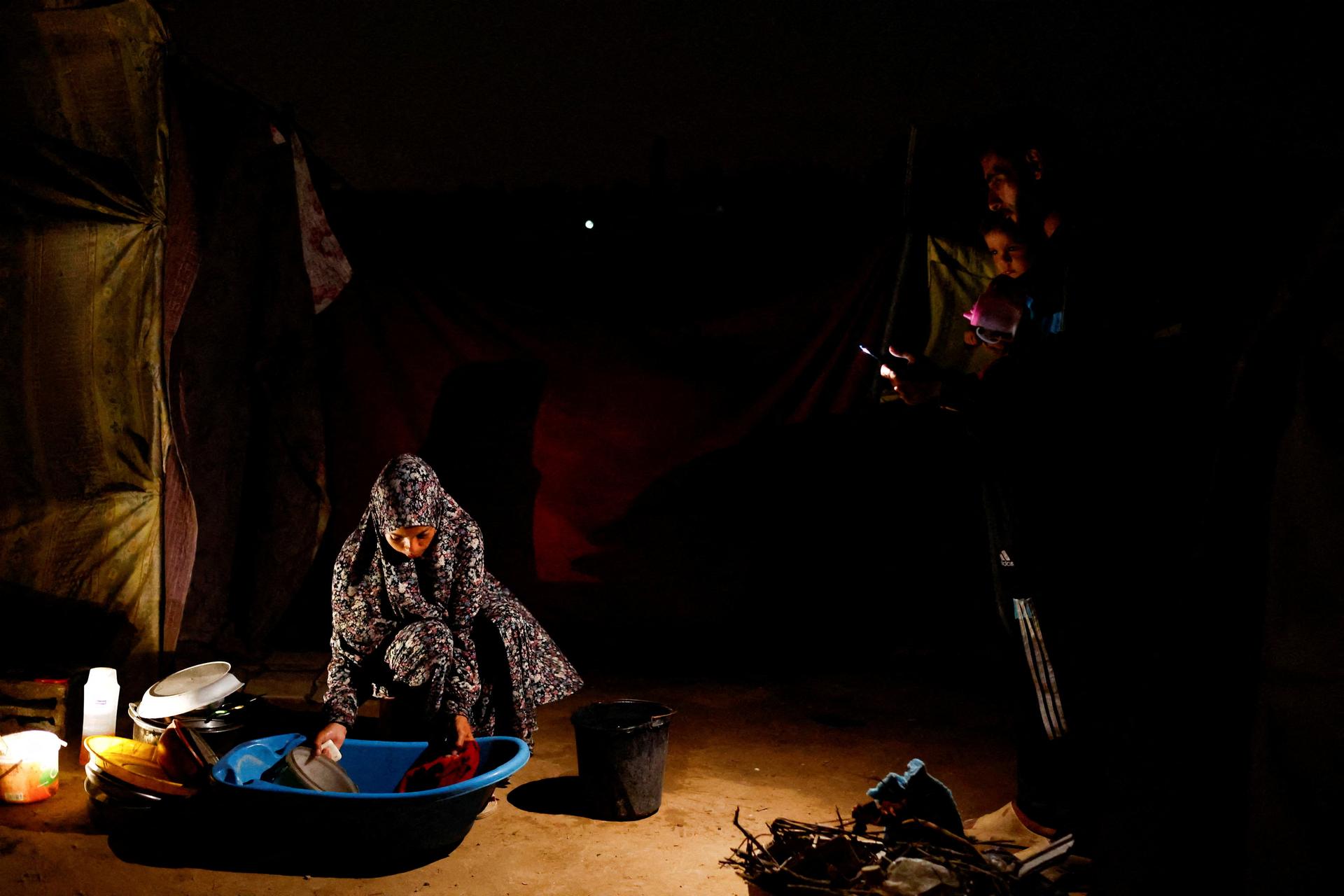
Palestinian Hanan al-Joujou washes dishes outside her family's tent, as they go without electricity for over two years, in Nuseirat, central Gaza Strip. REUTERS/Mahmoud Issa |
- Gaza electricity: Palestinian families in Gaza are living without electricity since war broke out more than two years ago. Before the war, Gaza mainly depended on imported electricity from Israel though supplies were shaky. There is still no electricity in Gaza even after last month's Israel-Hamas ceasefire. Click here for a Reuters report focusing on a few families struggling to survive.
- Sudan systematic rape: Women fleeing Sudan's al-Fashir city report killings, systematic rape and the disappearance of their children following its capture by the paramilitary Rapid Support Forces (RSF), the U.N. agency for women said. People fleeing the city have described civilians being shot in the streets and attacked in drone strikes.
- COP30 Indigenous protests: Dozens of Indigenous protesters forced their way into the COP30 venue this week as they demanded access to the U.N. compound, which led to clashes with security guards. The protesters said the action was aimed at demonstrating the desperation of their fight for forest protection.
- Peru Indigenous groups vs oil: Peru's northern Amazon holds hundreds of millions of barrels of crude, according to government data. But Indigenous groups say oil extraction over the past half-century brought pollution, not progress, and are opposed to a fresh wave of development. Click here for an in-depth Reuters graphic analysis of Petroperu's plans to revive Amazon oil output.
- U.S. migrant detention camp: U.S. Representative Veronica Escobar, a Texas Democrat, wrote a letter to the Department of Homeland Security Secretary Kristi Noem claiming that the conditions at Camp East Montana, the largest U.S. migrant detention camp facility in El Paso, Texas, are dangerous and inhumane, writing that people in the camp endure foul-tasting drinking water, rotten food and inadequate healthcare. The DHS denied the center violated federal standards for immigrant detention or was inhumane.
|
|
|
Toya Manchineri, general coordinator of the coordination of Indigenous Organizations of the Brazilian Amazon, shares his thoughts about Indigenous participation and climate justice at COP30. "Even with progress in Indigenous participation within the COP structure and a record presence at this year's conference, Indigenous peoples still have no real voice in the negotiations, the ones who speak are the diplomats. "Our absence in climate decisions is the real violence — not to mention language and translation barriers that make it difficult to follow the discussions. "We defend our territories — and all life on the planet — with our lives. "We are living through a climate emergency, it is time to act. "When a mobilization occupies space in this way, it reflects the outrage over the lack of representation in a place that should rightfully be held by Indigenous Peoples. We will continue to resist and fight for our rights, so that our demands are heard and our proposals become part of real climate solutions. We are the answer. "The demarcation of Indigenous lands is one of the most effective and low-cost measures to tackle the climate and biodiversity crises, because where territories are protected, the forest stays alive. "Unlocking these processes during COP30 would be a gesture of global responsibility and a historic step toward repairing long-denied rights." |
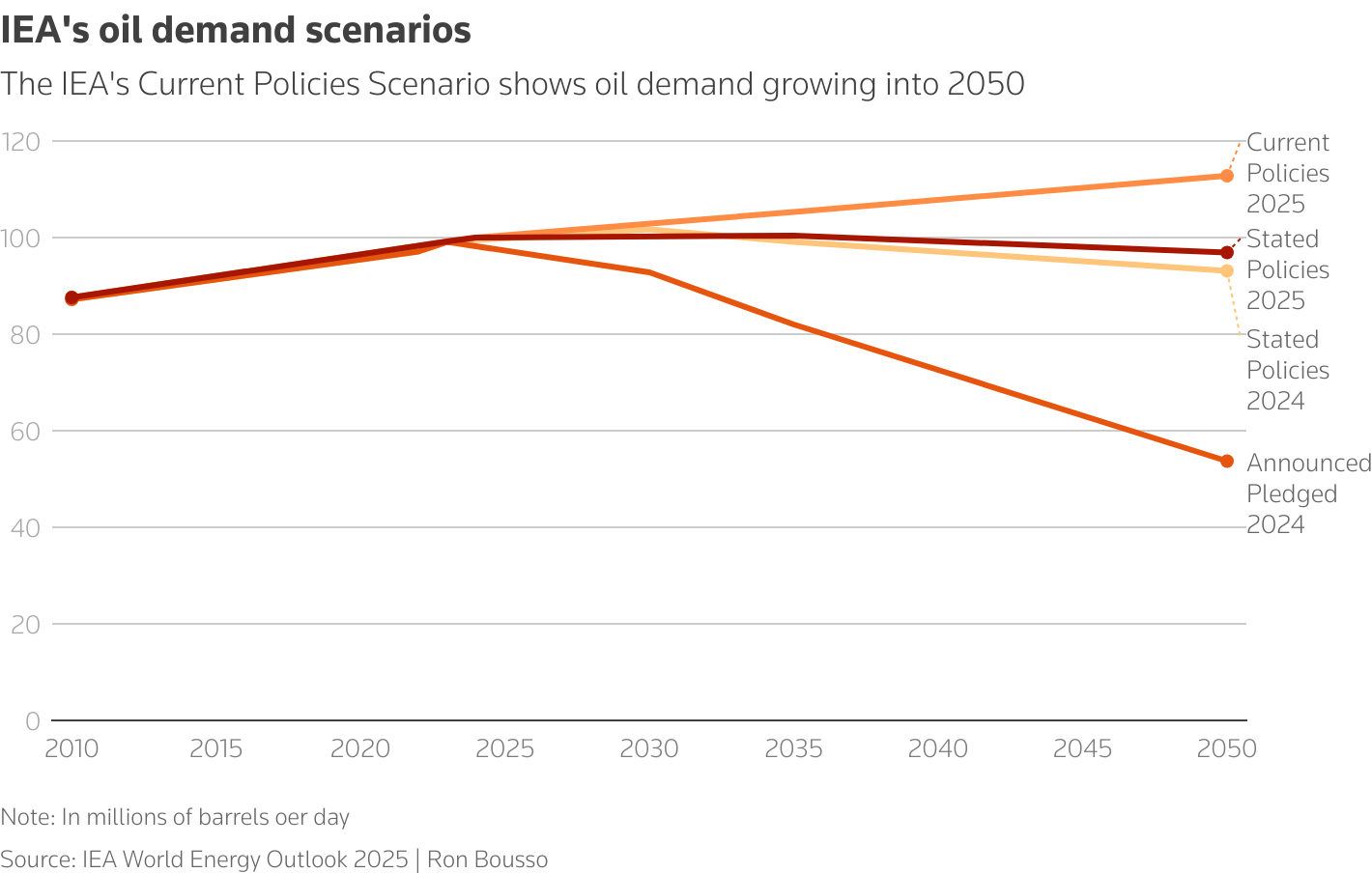
The International Energy Agency has said that global oil and gas demand could grow until 2050, which matches the findings from an earlier McKinsey report I highlighted last month. The Paris-based energy security watchdog latest report goes against previous expectations of a speedy transition to cleaner fuels following U.S. criticism about its climate focus. |
|
|
Sustainable Switch was edited by Alexander Smith. |
|
|
Sustainable Switch is sent three times a week. Think your friend or colleague should know about us? Forward this newsletter to them. They can also sign up here. Want to stop receiving this email? Unsubscribe here. To manage which newsletters you're signed up for, click here. This email includes limited tracking for Reuters to understand whether you've engaged with its contents. For more information on how we process your personal information and your rights, please see our Privacy Statement. Terms & Conditions |
|
|
|