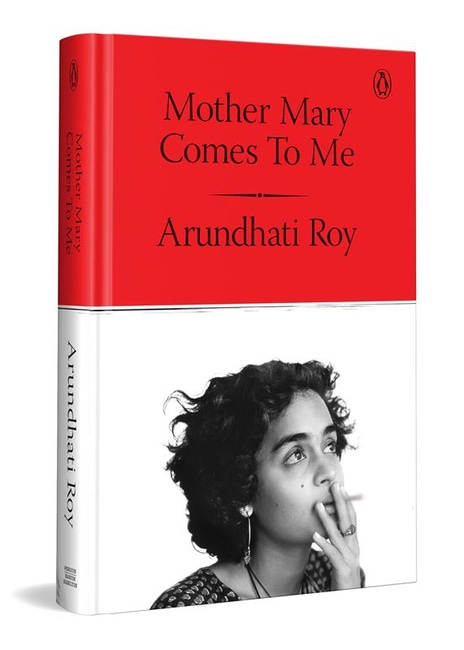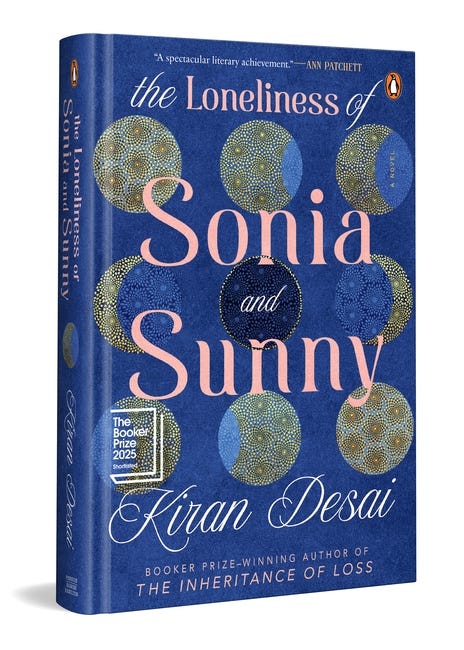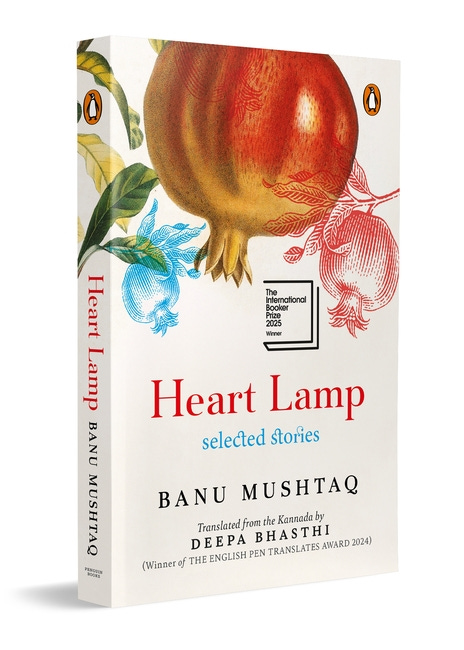
Fiction or non? Entertaining or insightful (or both)? Racy or meditative? The year gone by has been made richer by those who wrote and contributed to our knowledge of the world, of women and of relationships. At least two Indian women made it to international bestseller lists. To call Booker-prize winning author Arundhati Roy’s twin memoir—that of her own activism and that of her mother Mary—the most anticipated memoir of the year might be a bit of an under-statement. And Kiran Desai’s third novel, published after a break of two decades, had the heft of an epic. Translated into English by Deepa Bhasthi, Banu Mushtaq’s collection of short stories, Heart Lamp became the first Kannada book and first short story collection to win the 2025 International Booker Prize and looked at patriarchy and the gender roles it forces people to adopt. Some books made their impact from the grave. The publication of Virginia Roberts Giuffre’s devastating posthumous account of being a sex trafficking victim parceled out by Jeffrey Epstein and his accomplice Ghislaine Maxwell to the rich and powerful had the effect of bringing down an already disgraced Andrew, brother of the king of England, stripping him of his title and benefits. Meanwhile I asked four women whose reading taste is impeccable about the books that made an impact. Here’s the list:
Nilanjana S RoyReader, book-lover, editor and writer, Nilanjana S Roy is the author of The Wildings (2012) and The Hundred Names of Darkness (2013). Her 2016 Delhi noir fiction, Black River was shortlisted for the CWA Gold Dagger award.
Arundhati Roy: Mother Mary Comes To Me (India Hamish Hamilton, Rs 899) Arundhati Roy writes with candour and humour about two freedom-loving women — her mother, Mary Roy and herself — who profoundly shaped and questioned the cultures around them. A tender, ferocious and deeply honest memoir that doesn’t duck the abusive, destructive side of a legend, but rejects well-worn trauma plots in favour of calm acceptance and hard-won love. Mothers, daughters, writing and politics, and subtle lessons in how to keep faith with yourself through every challenge: this is a memoir for the ages. Anuradha Roy: Called By The Hills: A Home in the Himalaya (John Murray India, Rs 999) “…and then the colossal pyramids of distant rock and ice seemed right before us, ablaze in the sudden sunlight, inhabiting a different dimension far removed from ours, nearer the stars and moon.” I loved this clear, unsentimental but wondrous conjuring of the many seasons of a life spent in the mountains, far away from the self-importance of India’s metros. This is a thoughtful ramble around Ranikhet that brings home the sense of slow time over 25 years, the swing between comedy and tragedy, the austere peaks brooding in the distance. Roy’s superb watercolours are as essential and beautiful as the text.
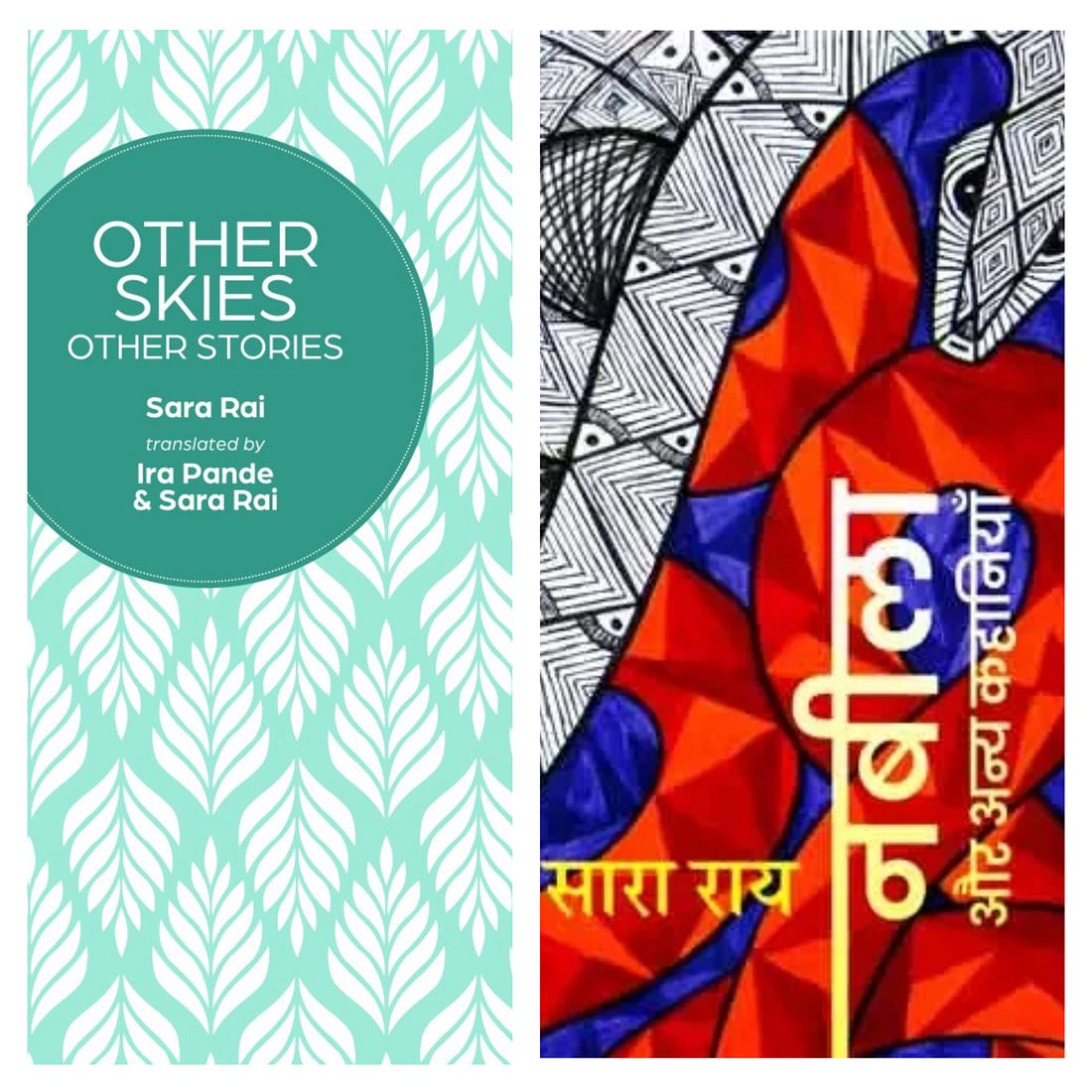
Kiran Desai: The Loneliness of Sonia and Sunny (India Hamish Hamilton, Rs 999) “A writer itched and itched to put everything into a book, or it became unbearable.” Kiran Desai is one of the funniest serious writers on the planet, and her third novel — swinging between India, America and Mexico, taking in immigration and return, falling in love with the wrong and the right people, the struggle to become a writer — is a colossal, immensely enjoyable triumph. Sara Rai, translated by Ira Pande and Sara Rai: Other Skies, Other Stories (Zubaan, Rs 595)
Urvashi ButaliaThe co-founder along with Ritu Menon of India’s first feminist publishing house, Kali for Women, Urvashi Butalia is also the founder of Zubaan Books. She has written several of her own books including the seminal, The Other Side of Silence: Voices from and the partition of India and Speaking Peace: Women’s voices from Kashmir. Zara Chowdhary: The Lucky Ones (Context, Rs 699) A heartbreaking memoir of a young woman’s recollections of the anti-Muslim pogrom in Gujarat in 2002. Zara Chowdhry traces her childhood in Gujarat, the slow, insidious isolation that begins to build up, and, at sixteen, the violence of 2002. As the family bands together, they wonder if they will survive, when the mobs will make it to their door and, with the kind of acute sharpness of the small acts of daily living that happen in that intense time, Zara Chowdhry also explores relationships within the family and how those transform in the face of widespread fear and dying.
Banu Mushtaq: Heart Lamp: Selected Stories (Penguin Random House, Rs 399) A keenly observed and meticulously rendered selection, vignettes almost, of stories of the communities the author meets in the course of her work – women, buffoonish men, patriarchy in all shapes and sizes, grandmothers and others. Deepa Bhasti’s elegant translation makes this a very special book to read.
Sara Rai: Nabila aur Anya Kahaniyan (Hindi original published by Rajkamal Prakashan, Rs 495, English translation published by Zubaan, Rs 595) I love Sara’s spare and evocative prose. The short story is like a piece of clay in her hand – she can draw a line in it and tell a story about that line and just as you think you might be getting close to the truth of the line, she will twist and turn it out of shape. And all this is done with empathy, minute attention to detail and sound and nuance and often, a touch of humour. Nayanjot Lahiri: Marshalling the Past: Ancient India and its Modern Histories (Permanent Black) I came across this book in a friend’s apartment where I was staying and could not put it down. Erudite, accessible, wide-ranging, the book tells stories of ancient civilizations, of monuments and museums, of Muslim begums protecting Buddhist heritages, and so much more. Namita Gokhale
Namita Gokhale has written 26 books, including fiction, mythology, and Himalayan studies. She has received the Sahitya Akademi award for her novel Things to Leave Behind. She is the co-founder and co-director of the Jaipur Literature Festival, unarguably one of largest festivals that celebrates the written word. Gokhale is deeply invested in translations and multilingual literary exchange. Volga: On the Banks of the Pampa (HarperCollins, Rs 299) Volga, the pen name of the acclaimed Telugu author Popuri Lalita Kumari, is a deep and incisive writer whose work I have long admired. On the Banks of the Pampa, the English version of her Telugu novel Pampateeram has been lyrically translated by Purnima Tammireddy. This intense fictional account of the encounter between Rama and Sabari evokes nature at her most primal and addresses some of the key questions and dilemmas of the foundational epic of the Ramayana. Tarini Mohan: Lifequake: A story of hope and humanity (Juggernaut, Rs 799) Tarini Mohan suffered a traumatic road accident in Kampala , Uganda when she was 24. I threw her into a long coma and left her with permanent physical disabilities. Her emotive and moving memoir speaks of her life before, during and after this devastating lifequake. Her extraordinary book is a testament to grit, determination, and reflective self-examination.
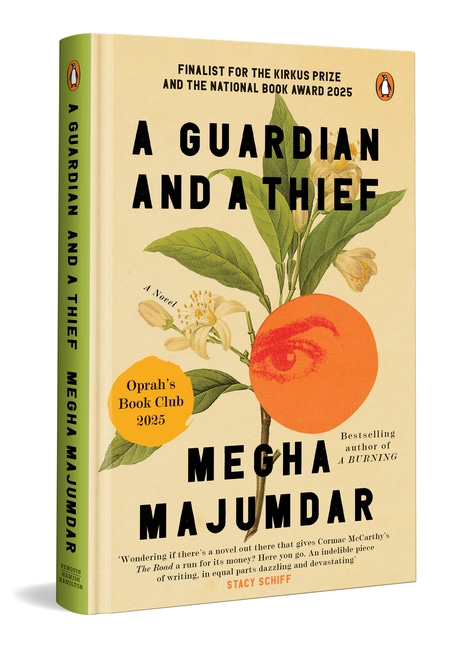
Megha Majumdar: A Guardian and a Thief (Hamish Hamilton, Rs 699) Megha Mazumdar’s remarkable new novel is situated in the course of one pivotal week, and poses deep ethical questions. The emotionally charged cli-fi (climate fiction) narrative has Ma with her young daughter and elderly father struggle to escape catastrophic events in a near-future Kolkata. Their treasured immigration documents are stolen by Boomba, the thief, and the story spirals into a an intense saga of hope, despair and familial love. Ruthvika Rao: The Fertile Earth (Hamish Hamilton, Rs 699) Ruthvika Rao’s ambitious debut novel has epic sweep, scale and vista . The personal and the political collide in this tale of star-crossed lovers and dynamic social change. The book carries an urgency, almost a hunger, within its pages as it travels with us from wooded rural landscapes to urban aspirations, all reflective of a nation and society facing new trials and challenges.
Ghazala Wahab
The executive editor of Force magazine, Ghazala Wahab’s 2021 debut book, Born a Muslim: Some truths about Islam in India won several awards including Book of the Year (non-fiction) at Tata Lit Live and Atta Galatta. She is the co-author with Pravin Sawhney of Dragon on our Doorstep: Managing China through military power. Her new book, The Hindi Heartland: A study (Aleph) was released earlier this year and is a critical look at what has long been regarded the political nerve-centre of India but nevertheless remains economically and socially backward. Arundhati Roy: Mother Mary Comes to Me (India Hamish Hamilton, Rs 899) An obvious choice that despite the flagging second half, is really a great book for several reasons. One, there is much curiosity about Arundhati Roy’s life, her sudden bursting on the literary firmament and then the quiet shift to activism. And two, her language—which flows like a river, gently and reflectively most of time but convulses occasionally with self-validation and vanity—holds lessons in memoir writing. She is candid and sparse at the same time. Ananya Vajpeyi: Place: Intimate Encounters With Cities (Women Unlimited Ink, Rs 625) I bought Ananya’s book the moment I learnt about it because I was curious about the concept of memoirs of cities. I felt that this was something I would have loved to write myself at some point. Thankfully Ananya has disabused me of this assumption. Her book is hugely perceptive, bold and beautifully written. In her writing, the personal seamlessly flows into the political, both of which shape her relationship with the cities she writes about. Absolutely brilliant.
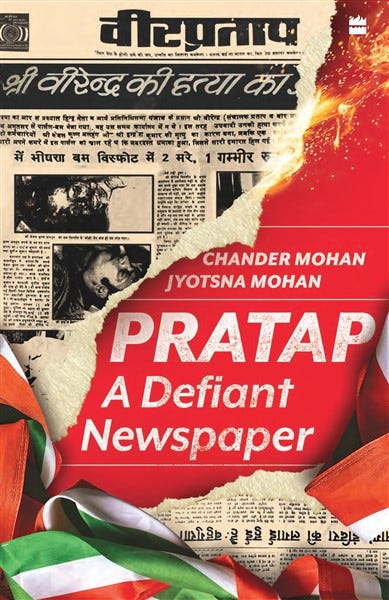
Chander Mohan and Jyotsna Mohan Pratap: A Defiant Newspaper (HarperCollins, Rs 499) Though Pratap came out earlier in the year, I got to know about it quite recently and was immediately drawn to it. The pre-independence newspaper Pratap needs no introduction, but its founder does deserve a place in modern Indian history. I had a fleeting acquaintance with Virendra (Mohan) who founded Pratap in Aparna Vaidik’s Waiting for Swaraj, but the eponymous book authored jointly his granddaughter Jyotsna and his son Chander Mohan finally does justice to his legacy of courage and inclusive patriotism. A must read, especially in our present times, when most of the ‘mainstream media’ is at its lowest. That’s it for this week. If you have a tip, feedback, criticism, please write to me at: namita.bhandare@gmail.com. Produced by Shad Hasnain.
|
Absolutely the best books by women in 2025
18:30
0