| | | | | |
Inflation Just Proved It's Not Dead
Remember when everyone said inflation was under control? That narrative died this morning. The January Producer Price Index—which measures what businesses pay for goods and services before they reach you—came in way hotter than expected. And when we say "way hotter," we mean it nearly doubled what economists were forecasting.
Here's what happened at 8:30 AM when the numbers dropped:
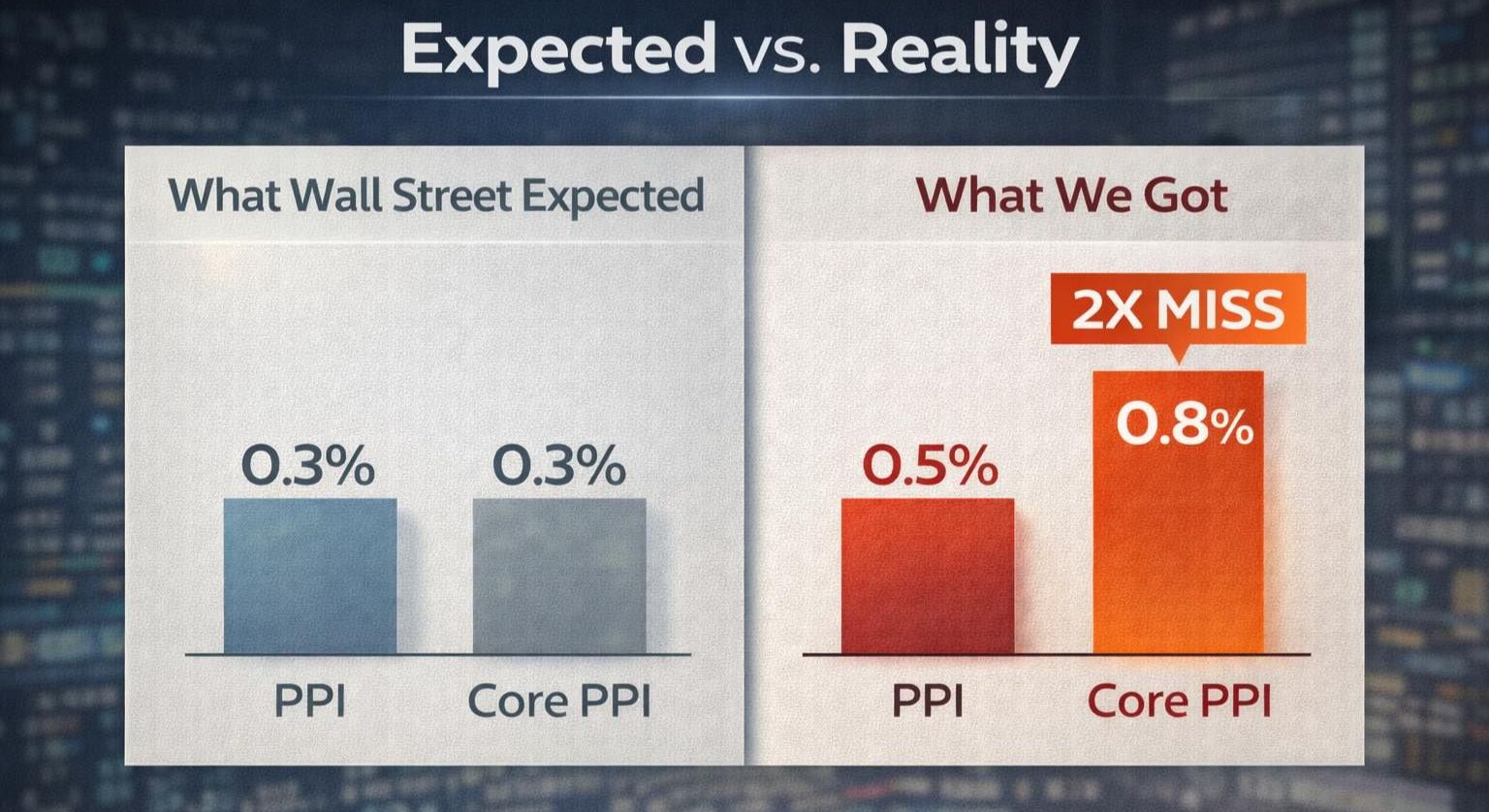
What They Expected vs. What We Got: - Overall PPI: Expected to rise 0.3% for the month. Actually rose 0.5%.
- Core PPI (which strips out food and energy to see the real trend): Expected 0.3%. Actually rose 0.8%.
That core number is the one that matters. And it didn't just miss—it came in at more than double what Wall Street was expecting.
Why This Number Matters to You
Producer prices are basically wholesale inflation. They measure what companies pay for stuff before they sell it to you. When these numbers go up, it means: - Your prices are going up soon. Companies don't eat higher costs—they pass them on to customers. That's you.
- The Fed isn't cutting rates. The Federal Reserve wants inflation at 2%. We're stuck around 3%. When wholesale prices surge like this, the Fed can't lower interest rates. That means your mortgage, car loan, and credit card rates stay high.
- Tariffs are showing up in the data. One specific category jumped 14.4% in a single month: margins for professional and commercial equipment wholesaling. Translation? Businesses are paying Trump's tariffs and passing the cost down the chain.
What's Driving The Surge
The report shows services inflation—things like healthcare, utilities, and business services—jumped 0.8% in one month. Trade services, which measure the markup that wholesalers and retailers charge, spiked 2.5%.
Here's the simple story: Tariffs made imports more expensive. Wholesalers paid more. They're now charging retailers more. Retailers will charge you more. It's already happening.
Energy and food prices actually fell in January. But when you strip those out and look at everything else, core goods prices surged 0.7%. The price increases are spreading across the economy. | | | | | The Fed's Nightmare Scenario
The Federal Reserve has one job right now: get inflation back to 2% without crashing the economy.
This report makes that job nearly impossible.
The Producer Price Index feeds directly into the PCE Price Index, which is the Fed's favorite way to measure inflation. Economists are now estimating that January's core PCE—the number the Fed watches most closely—could come in at 0.5% for the month. That would put it at 3.1% year-over-year.
The Fed's target? 2.0%.
We're not even close. And this report shows we're moving in the wrong direction.
Before this data, the market had already priced in basically zero chance the Fed would cut rates at its March meeting. Now? Forget rate cuts for the foreseeable future. Some analysts are even starting to whisper about rate hikes if this keeps up.
How The Market Reacted
Stocks opened Friday in freefall: - Dow Jones: Down 574 points (-1.2%)
- S&P 500: Down 0.9%
- Nasdaq: Down 1.2%
The 10-year Treasury yield, which had dipped below 4% earlier this week, spiked back up. Higher yields mean the government has to pay more to borrow money, which eventually filters through to everything from mortgages to corporate debt.
Tech stocks got hammered again. Nvidia, which reported a perfect earnings beat on Wednesday, extended its post-earnings slide with another 2% drop Friday. The company did everything right.
The stock is still falling.
February Ends Ugly
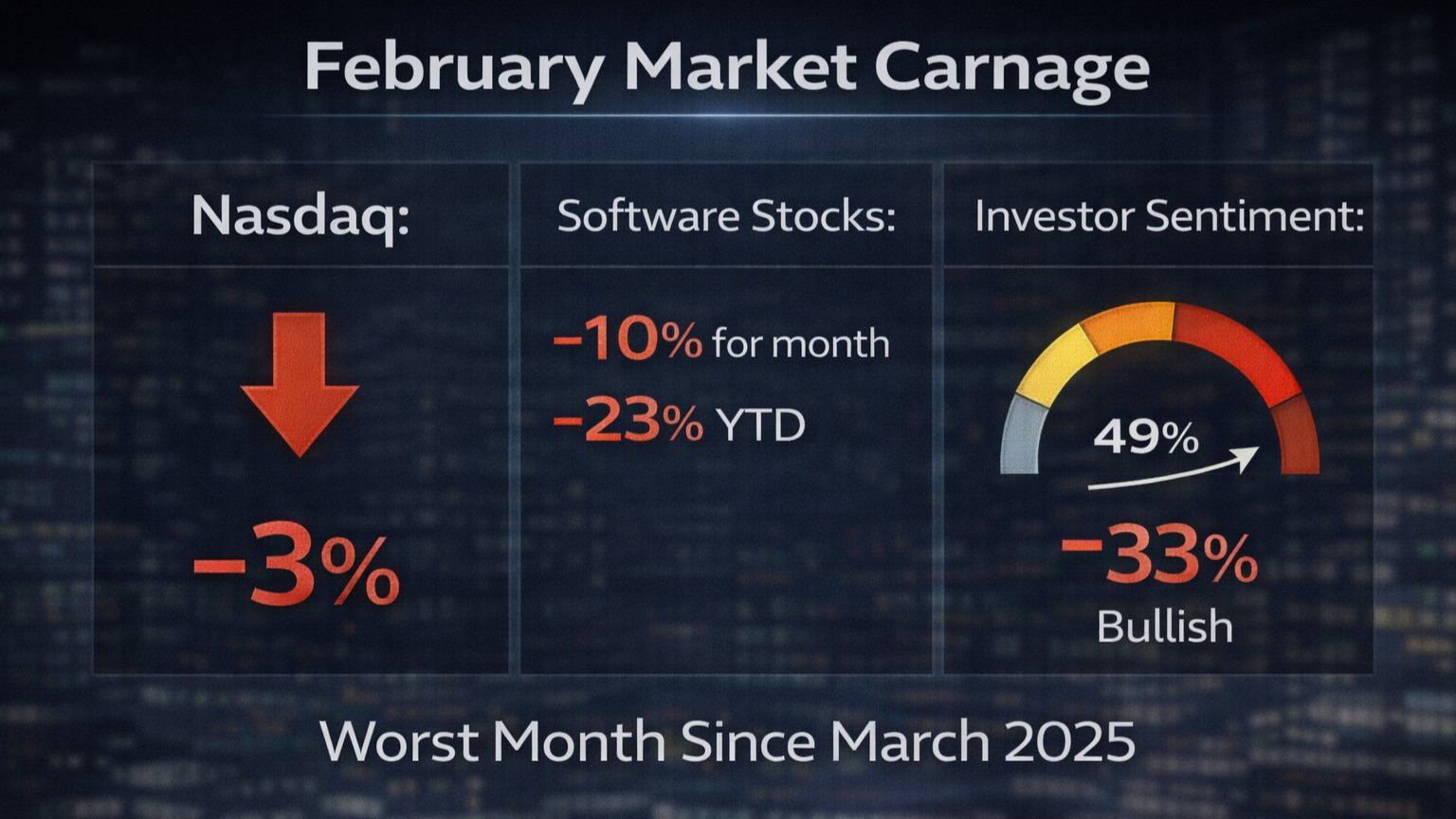
This caps off a brutal month for markets: - Nasdaq: Down about 3% for February—worst month since March 2025
- Software stocks: Down 10% for the month, down 23% year-to-date
- Investor sentiment: Bullish investors dropped from 49% in mid-January to just 33% now
February had three major storylines that killed the market: - Tariff whiplash – Supreme Court struck down Trump's tariffs, he announced new ones hours later, chaos ensued
- AI fears – $700 billion in spending, uncertain returns, software companies getting automated away
- Sticky inflation – And now this PPI report confirming prices aren't cooperating
The Tariff Effect Is Real
Let's connect the dots on what's actually happening in the economy:
Trump's tariffs went into effect. Importers paid them. Wholesalers are now paying higher prices for goods. This report shows they're marking up those goods and passing costs downstream.
That 14.4% spike in professional and commercial equipment wholesaling margins? That's not normal business activity. That's businesses saying "tariffs cost us money, so we're charging you more."
Next month, those higher wholesale prices hit retail. The month after that, you're paying more at checkout.
The Supreme Court struck down Trump's original tariffs last week, but he immediately announced a new 15% global tariff using different legal authority. The chaos continues. The price increases continue.
What Economists Are Saying
Wholesale inflation came in hotter than expected, driven by a 0.8% jump in services. That's the biggest component of the economy and the hardest to bring down.
Core PCE is now expected to show inflation running above 3% annually when the next report drops March 13—just days before the Fed's next meeting on March 17-18.
The market is watching whether inflation pressure is concentrated in services or spreading back into goods. This report suggests it's doing both.
One analyst put it bluntly: "A hot PPI makes it harder for policymakers to argue that inflation is gliding smoothly back to target."
The Bottom Line
Inflation was supposed to be yesterday's problem. The Fed was supposed to start cutting rates. The economy was supposed to be in a "soft landing."
This report says none of that is happening.
Wholesale prices are surging. Tariffs are getting passed through. Services inflation is accelerating. And the path back to 2% inflation just got a lot longer and harder.
For regular people, this means: - Prices keep going up at the store
- Interest rates stay high on your loans
- The Fed stays on the sidelines
- The economic "soft landing" everyone was celebrating looks more like a bumpy descent
For the stock market, this means: - Rate cuts are off the table
- Higher rates mean lower stock valuations (especially for tech)
- Margin pressure for companies dealing with higher costs
- Continued volatility
The market wanted good news to close out February. It got the opposite. Inflation isn't dead. It's just getting started on round two. | | | Your interaction with our content, in any format, is appreciated. We value your time and the trust you place in our communications. Thank you for being an active member of our community, and we look forward to continued exchanges in the future. Privacy Policy Wall Street Watchdogs ("the Company") values the privacy of visitors to Wall Street Watchdogs site and users of our services. This notice explains how we collect, use, and protect information. Why You're Receiving This Email You're receiving this email because at some point, you opted in to receive updates, news, or information on a specific topic we've previously discussed or shared. Whether it was through a subscription, a form submission, or another form of communication, your information was shared willingly, and we respect your decision to connect with us. Thank you for taking the time to read this email. This message is part of an ongoing conversation between us, and I want to take a moment to ensure you have full transparency about why you received this message, how your information is handled, and what to expect from future emails. If you're wondering about the nature of our correspondence, rest assured that we aim to keep all emails relevant, timely, and from unnecessary clutter. This includes respecting your inbox and refraining from sending irrelevant messages. A Commitment to Non-Intrusive Emails We aim to create a non-intrusive communication experience. This means we won't overwhelm your inbox with excessive messages, and we work hard to ensure our content remains clear and concise. The purpose of this email is to stay connected with you and provide updates or information that we believe is meaningful. If we ever fail to meet these standards, we encourage you to let us know. Feedback, whether positive or constructive, is always appreciated. Your thoughts help us understand how we can do better and improve our communication approach. While we cannot promise every suggestion will be implemented, we will take the time to carefully review and consider your input. Accessibility and Communication If you have any trouble accessing the unsubscribe page, managing preferences, or understanding why you're receiving this email, you can reach out directly to our support team. We aim to provide a response within a reasonable time frame and address your concerns effectively. Our communication is designed to be as inclusive as possible, but we know there's always room for improvement. If you have any feedback on how we can make our emails more accessible or relevant, please don't hesitate to share. Your Privacy is Important We value your trust and take your privacy very seriously. The information you provide is securely stored and never shared, sold, or used outside the purpose for which you provided it. This privacy policy describes how we collects, uses, and protects your information. We collect information you voluntarily provide, such as your name, email address, or phone number. We may also collect technical data from your visit, including browser type, operating system, and your IP address. We use this information to respond to your inquiries, provide access to services, and improve our communications. We do not share your information with unrelated third parties. Some of our services may use third-party tools that store or process data on our behalf. These tools are selected with care and are expected to maintain data responsibly. We do not knowingly collect personal information from children under 13 years of age. If we discover that such information was provided without parental consent, we will delete it promptly. You can request to update or delete your personal information by contacting us. We may update this privacy policy occasionally. Changes will be reflected on the page. Orders with Wall Street Watchdogs are handled using secure processes. If there is a need to update delivery details, someone from our team may contact you. Please note, we do not ask for personal payment information by email. You can enable extra sign-in protection and use strong security to help keep you safe. We regularly review our systems and follow best practices to help protect your information. If you notice anything unusual, it may be helpful to review your settings. Transparency is our priority, and we're happy to address any questions you might have. How to Unsubscribe or Manage Your Preferences We understand that everyone's inbox is different. If you ever find our emails no longer relevant, there's no hard feelings. You can easily manage your email preferences or unsubscribe using the link provided below. By clicking the unsubscribe link, you'll be taken to a page where you can either adjust your communication preferences (such as receiving fewer emails or only on specific topics) or completely remove yourself from our list. The process is straightforward, and any changes will take effect promptly. We don't use tricks or gimmicks to keep you subscribed. Our priority is to ensure that our emails add value to your day, and if they don't, we respect your decision to part ways. Legal Information We comply with all applicable laws and regulations regarding email communication. This includes adhering to laws and maintaining the highest standards for consent-based communication. Your trust matters, and we work diligently to ensure every email you receive meets these requirements. If you need further clarification on our compliance policies or legal obligations, please ask. Transparency and accountability are central to our communication strategy, and we're happy to provide additional details if needed. Contact Information We strive to ensure all communication channels are open and readily available to you. Whether it's a question, comment, or concern, our team is ready to assist. For assistance, please contact our team via email by replying to this email. A Final Note Emails are one of the many ways we stay connected, but we understand they aren't perfect for everyone. If there's another way you'd prefer to communicate or stay updated, let us know. Whether it's through social media, a direct call, or another channel, we're open to finding the most effective way to share information with you. We want to emphasize that our goal is never to disrupt or clutter your inbox. Every email sent is intended to provide value, and we genuinely appreciate your time and attention. This footer was designed to ensure transparency, provide essential information, and give you full control over your communication preferences. We hope it meets your expectations, but if there's anything you'd like to see improved, we're always here to listen. Best regards, Wall Street Watchdogs | | | Your interaction with our content, in any format, is appreciated. We value your time and the trust you place in our communications. Thank you for being an active member of our community, and we look forward to continued exchanges in the future. Privacy Policy Wall Street Watchdogs ("the Company") values the privacy of visitors to Wall Street Watchdogs site and users of our services. This notice explains how we collect, use, and protect information. Why You're Receiving This Email You're receiving this email because at some point, you opted in to receive updates, news, or information on a specific topic we've previously discussed or shared. Whether it was through a subscription, a form submission, or another form of communication, your information was shared willingly, and we respect your decision to connect with us. Thank you for taking the time to read this email. This message is part of an ongoing conversation between us, and I want to take a moment to ensure you have full transparency about why you received this message, how your information is handled, and what to expect from future emails. If you're wondering about the nature of our correspondence, rest assured that we aim to keep all emails relevant, timely, and from unnecessary clutter. This includes respecting your inbox and refraining from sending irrelevant messages. A Commitment to Non-Intrusive Emails We aim to create a non-intrusive communication experience. This means we won't overwhelm your inbox with excessive messages, and we work hard to ensure our content remains clear and concise. The purpose of this email is to stay connected with you and provide updates or information that we believe is meaningful. If we ever fail to meet these standards, we encourage you to let us know. Feedback, whether positive or constructive, is always appreciated. Your thoughts help us understand how we can do better and improve our communication approach. While we cannot promise every suggestion will be implemented, we will take the time to carefully review and consider your input. Accessibility and Communication If you have any trouble accessing the unsubscribe page, managing preferences, or understanding why you're receiving this email, you can reach out directly to our support team. We aim to provide a response within a reasonable time frame and address your concerns effectively. Our communication is designed to be as inclusive as possible, but we know there's always room for improvement. If you have any feedback on how we can make our emails more accessible or relevant, please don't hesitate to share. Your Privacy is Important We value your trust and take your privacy very seriously. The information you provide is securely stored and never shared, sold, or used outside the purpose for which you provided it. This privacy policy describes how we collects, uses, and protects your information. We collect information you voluntarily provide, such as your name, email address, or phone number. We may also collect technical data from your visit, including browser type, operating system, and your IP address. We use this information to respond to your inquiries, provide access to services, and improve our communications. We do not share your information with unrelated third parties. Some of our services may use third-party tools that store or process data on our behalf. These tools are selected with care and are expected to maintain data responsibly. We do not knowingly collect personal information from children under 13 years of age. If we discover that such information was provided without parental consent, we will delete it promptly. You can request to update or delete your personal information by contacting us. We may update this privacy policy occasionally. Changes will be reflected on the page. Orders with Wall Street Watchdogs are handled using secure processes. If there is a need to update delivery details, someone from our team may contact you. Please note, we do not ask for personal payment information by email. You can enable extra sign-in protection and use strong security to help keep you safe. We regularly review our systems and follow best practices to help protect your information. If you notice anything unusual, it may be helpful to review your settings. Transparency is our priority, and we're happy to address any questions you might have. How to Unsubscribe or Manage Your Preferences We understand that everyone's inbox is different. If you ever find our emails no longer relevant, there's no hard feelings. You can easily manage your email preferences or unsubscribe using the link provided below. By clicking the unsubscribe link, you'll be taken to a page where you can either adjust your communication preferences (such as receiving fewer emails or only on specific topics) or completely remove yourself from our list. The process is straightforward, and any changes will take effect promptly. We don't use tricks or gimmicks to keep you subscribed. Our priority is to ensure that our emails add value to your day, and if they don't, we respect your decision to part ways. Legal Information We comply with all applicable laws and regulations regarding email communication. This includes adhering to laws and maintaining the highest standards for consent-based communication. Your trust matters, and we work diligently to ensure every email you receive meets these requirements. If you need further clarification on our compliance policies or legal obligations, please ask. Transparency and accountability are central to our communication strategy, and we're happy to provide additional details if needed. Contact Information We strive to ensure all communication channels are open and readily available to you. Whether it's a question, comment, or concern, our team is ready to assist. For assistance, please contact our team via email by replying to this email. A Final Note Emails are one of the many ways we stay connected, but we understand they aren't perfect for everyone. If there's another way you'd prefer to communicate or stay updated, let us know. Whether it's through social media, a direct call, or another channel, we're open to finding the most effective way to share information with you. We want to emphasize that our goal is never to disrupt or clutter your inbox. Every email sent is intended to provide value, and we genuinely appreciate your time and attention. This footer was designed to ensure transparency, provide essential information, and give you full control over your communication preferences. We hope it meets your expectations, but if there's anything you'd like to see improved, we're always here to listen. Best regards, Wall Street Watchdogs | | | Your interaction with our content, in any format, is appreciated. We value your time and the trust you place in our communications. Thank you for being an active member of our community, and we look forward to continued exchanges in the future. Privacy Policy Wall Street Watchdogs ("the Company") values the privacy of visitors to Wall Street Watchdogs site and users of our services. This notice explains how we collect, use, and protect information. Why You're Receiving This Email You're receiving this email because at some point, you opted in to receive updates, news, or information on a specific topic we've previously discussed or shared. Whether it was through a subscription, a form submission, or another form of communication, your information was shared willingly, and we respect your decision to connect with us. Thank you for taking the time to read this email. This message is part of an ongoing conversation between us, and I want to take a moment to ensure you have full transparency about why you received this message, how your information is handled, and what to expect from future emails. If you're wondering about the nature of our correspondence, rest assured that we aim to keep all emails relevant, timely, and from unnecessary clutter. This includes respecting your inbox and refraining from sending irrelevant messages. A Commitment to Non-Intrusive Emails We aim to create a non-intrusive communication experience. This means we won't overwhelm your inbox with excessive messages, and we work hard to ensure our content remains clear and concise. The purpose of this email is to stay connected with you and provide updates or information that we believe is meaningful. If we ever fail to meet these standards, we encourage you to let us know. Feedback, whether positive or constructive, is always appreciated. Your thoughts help us understand how we can do better and improve our communication approach. While we cannot promise every suggestion will be implemented, we will take the time to carefully review and consider your input. Accessibility and Communication If you have any trouble accessing the unsubscribe page, managing preferences, or understanding why you're receiving this email, you can reach out directly to our support team. We aim to provide a response within a reasonable time frame and address your concerns effectively. Our communication is designed to be as inclusive as possible, but we know there's always room for improvement. If you have any feedback on how we can make our emails more accessible or relevant, please don't hesitate to share. Your Privacy is Important We value your trust and take your privacy very seriously. The information you provide is securely stored and never shared, sold, or used outside the purpose for which you provided it. This privacy policy describes how we collects, uses, and protects your information. We collect information you voluntarily provide, such as your name, email address, or phone number. We may also collect technical data from your visit, including browser type, operating system, and your IP address. We use this information to respond to your inquiries, provide access to services, and improve our communications. We do not share your information with unrelated third parties. Some of our services may use third-party tools that store or process data on our behalf. These tools are selected with care and are expected to maintain data responsibly. We do not knowingly collect personal information from children under 13 years of age. If we discover that such information was provided without parental consent, we will delete it promptly. You can request to update or delete your personal information by contacting us. We may update this privacy policy occasionally. Changes will be reflected on the page. Orders with Wall Street Watchdogs are handled using secure processes. If there is a need to update delivery details, someone from our team may contact you. Please note, we do not ask for personal payment information by email. You can enable extra sign-in protection and use strong security to help keep you safe. We regularly review our systems and follow best practices to help protect your information. If you notice anything unusual, it may be helpful to review your settings. Transparency is our priority, and we're happy to address any questions you might have. How to Unsubscribe or Manage Your Preferences We understand that everyone's inbox is different. If you ever find our emails no longer relevant, there's no hard feelings. You can easily manage your email preferences or unsubscribe using the link provided below. By clicking the unsubscribe link, you'll be taken to a page where you can either adjust your communication preferences (such as receiving fewer emails or only on specific topics) or completely remove yourself from our list. The process is straightforward, and any changes will take effect promptly. We don't use tricks or gimmicks to keep you subscribed. Our priority is to ensure that our emails add value to your day, and if they don't, we respect your decision to part ways. Legal Information We comply with all applicable laws and regulations regarding email communication. This includes adhering to laws and maintaining the highest standards for consent-based communication. Your trust matters, and we work diligently to ensure every email you receive meets these requirements. If you need further clarification on our compliance policies or legal obligations, please ask. Transparency and accountability are central to our communication strategy, and we're happy to provide additional details if needed. Contact Information We strive to ensure all communication channels are open and readily available to you. Whether it's a question, comment, or concern, our team is ready to assist. For assistance, please contact our team via email by replying to this email. A Final Note Emails are one of the many ways we stay connected, but we understand they aren't perfect for everyone. If there's another way you'd prefer to communicate or stay updated, let us know. Whether it's through social media, a direct call, or another channel, we're open to finding the most effective way to share information with you. We want to emphasize that our goal is never to disrupt or clutter your inbox. Every email sent is intended to provide value, and we genuinely appreciate your time and attention. This footer was designed to ensure transparency, provide essential information, and give you full control over your communication preferences. We hope it meets your expectations, but if there's anything you'd like to see improved, we're always here to listen. Best regards, Wall Street Watchdogs | | | | |