Bot and Souled: Decoding "Maybe Happy Ending"The Tony winner's robots, fireflies, and faithful houseplant
EDITOR’S NOTE: Starting today, MARQUEE will be distributed on Wednesdays instead of Thursdays.
Sign up for David Armstrong’s 8-week Introduction to Broadway course for just $50 and get two month’s Broadway Maven Membership for FREE — with no recurring charges. David will be tracing Broadway history from the very beginnings in the late 19th century all the way to today. David teaches musical theater at the University of Washington and is the author of the text Broadway Nation: How Immigrant, Jewish, Queer, and Black Artists invented the Broadway Musical. These eight 70-minute classes will be a perfect first exposure to (or review of) the development of the art form we love. (If you get out your calculators you’ll see what a tremendous bargain this is. It’s $50 for an eight-week course, plus at least 10 more classes. If you’re. Broadway Maven-curious, you can’t afford NOT to take this class.) (Current Broadway Maven Members are already enrolled and do not have to sign up or pay.)
Shalom, Broadway lovers!On this week’s marquee: A) An essay analyzing five symbols from Tony winner Maybe Happy Ending; B) a StageStreams about the Sondheim collection at the Library of Congress; C) commentary about translating expletives in Chicago into French; D) two Broadway rebuses; and E) a Last Blast about Mamma Mia!.
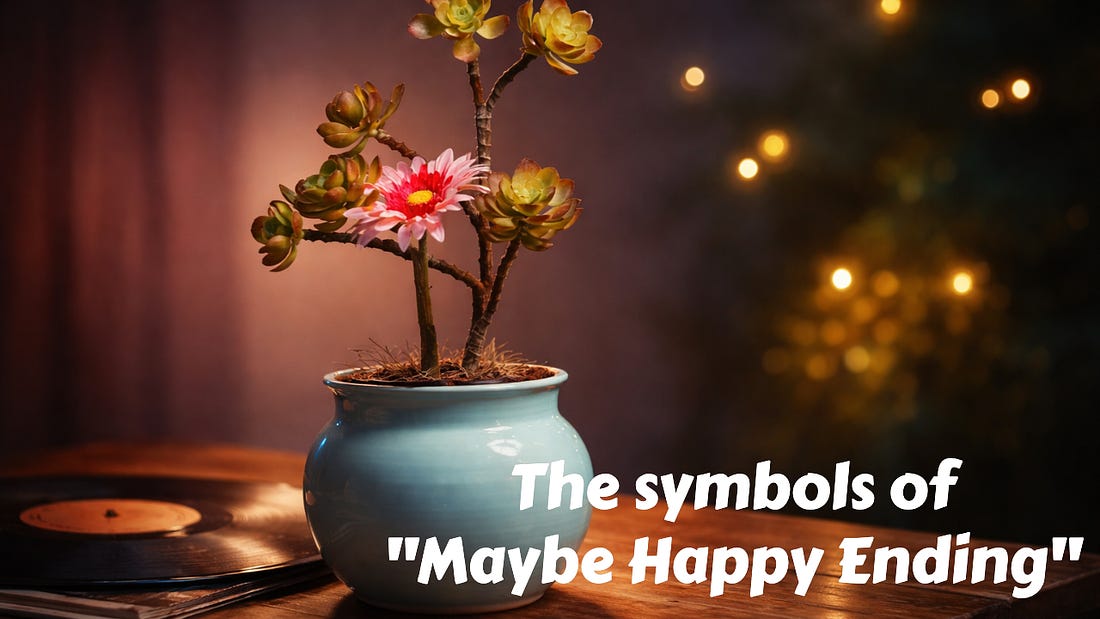
ESSAY: The houseplant may be the most important character in Maybe Happy Ending. HwaBoon. The plant is alive, but cannot think, choose, or even move. That places it in sharp contrast with Oliver and Claire, who possess growing emotional awareness and agency despite not being biologically alive. By setting a living but passive organism alongside robots capable of love and sacrifice, the musical gently sketches an existential contrast. The plant lives but cannot love; the robots love but cannot live—and the audience instinctively values the second more than the first. Fireflies. The tiny insects Oliver and Claire encounter glow with a light that comes not from wires or batteries but from life itself. Their bioluminescence stands in quiet contrast to the artificial illumination of the robots’ world—circuits, code, and electricity. In a story about machines trying to understand what it means to live, the fireflies’ glow becomes a symbol of the spark of life the robots can admire and yearn for but never possess. Records. Oliver plays the music he loves not from an app or CD player but from vinyl. Records are an outdated technology, much like helperbots who have been replaced by newer models. Yet vinyl also evokes warmth and richness, a sound that feels more human than digital perfection. In that sense, the medium becomes a subtle symbol of Oliver himself—obsolete, perhaps, but unexpectedly moving. Jazz. Its defining feature is improvisation—musicians creating something new in real time. In Maybe Happy Ending, the music Oliver loves reflects the blurring of programming and free choice. The improvisation Oliver enjoys is captured in recorded music, a spontaneous act fixed in time—a surprisingly apt metaphor for freedom emerging within a programmed system. To improvise is to choose in real time, and that freedom is one of the clearest marks of being alive. Robots. The musical’s most powerful symbol is the one standing in plain sight: its robot protagonists. Built to serve, they gradually demonstrate the traits that define human life—choice, devotion, and love. Claire (whose name suggests clarity) helps illuminate these emotions, while Oliver (the abandoned helperbot who shares his name with a famous Broadway orphan) embodies the ache for belonging. In watching machines discover these qualities, the audience is invited to reconsider what truly separates the human from the mechanical. In an era of increasing unease over artificial intelligence and indeed robots themselves, that theme helps explain why it’s only “maybe” a happy ending. StageStreams: In this video from DC’s Signature Theater, archivist Mark Horowitz from the Library of Congress gives a tour of their Sondheim collection. This is fun: Sondheim refers to 158 professions in the drafts for Sweeney Todd‘s “A Little Priest.” Gigolo makes an appearance—and get this draft reference to Jewish clergy from a draft by the never-had-a-bar-mitzvah Sondheim: “Everybody shaves except rabbis and riff raff.” 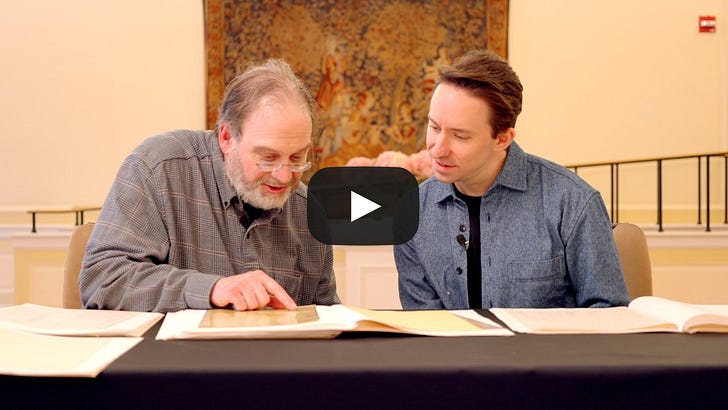 COMMENTARY: What’s in an expletive? Quite a lot, as it turns out, when a Broadway musical crosses linguistic borders. Last summer, I saw the French-language version of the musical Chicago in Montreal, and last weekend I saw a very different translation in Paris. The differences I noticed are a small but revealing case study in the socio-politico-linguistics of profanity, idiom, and audience expectation. Take the moment when Roxy gets press attention for announcing a pregnancy. In Paris, Velma’s exasperated reaction was “merde.” In Montréal, the same beat landed with “shit.” The explanation goes well beyond “Montréal is closer to America.” In metropolitan French, “merde” is the ordinary, idiomatic expletive: blunt but widely usable. In Québec French, by contrast, “merde” can sound faintly European and affected. Everyday speech in Québec draws more heavily on English borrowings or religious curses like “tabarnak.” A translator working for a Montréal audience may therefore find “shit” the line that sounds most natural. There were other differences—the translations of “All That Jazz” differed widely, for example—but Velma’s foul interjection put the cross-Atlantic francophone divide into sharpest relief. Zut! Incidentally, I recently translated Sondheim’s “Losing My Mind” into French for a lecture I gave at a conference in Paris. Francophone MARQUEE readers can watch a video explaining my choices in next week’s issue. À plus! NEXT WEEK: Blame $400 tickets on “greedy” producers? Think broader. The full cast includes theater owners and (yes) unions. REBUSES: Identify the Broadway shows represented by these rebuses. Answers at the end of the issue, below the Last Blast.
Join The Broadway Maven! Nowhere else online brims with this much Broadway content, and certainly not for so little (Membership is $25 a month for 5-15 compelling classes). Purchase a monthly or an annual plan. Cancel at any time. Sign up here:
Note: A full calendar of upcoming classes is always available at TheBroadwayMaven.com.• Sunday, March 15 Waitress, Noon and 7 pm ET. (MEMBERS ONLY) • Monday, March 23 Introduction to Bock & Harnick with Steven Bell, 7 pm ET. (MEMBERS ONLY) • Sunday, March 29 Rent with Mateo Chavez Lewis, 7 pm ET. (MEMBERS ONLY) • Tuesday, March 31 Les Misérables, Noon and 7 pm ET (the two classes are different). FREE, registration opens soon. • Monday, April 6 Introduction to Broadway with David Armstrong, Noon ET. (MEMBERS ONLY) part of an 8-week course • Tuesday, April 7 Bye, Bye Birdie with Steven Bell, 7 pm ET. (MEMBERS ONLY)
LAST BLAST: In Mamma Mia!’s “Gimme, Gimme, Gimme,” Sophie doesn’t come off as a sweet ingénue, despite her typical portrayal. She’s downright sharp-tongued, bordering on nasty. She needles Sam for liking “buildings more than people,” cuts Harry down about his age, and dismisses Bill for dating a nightclub singer (her own mother!) despite family wealth. It’s a striking moment: Sophie’s search for identity starts not with yearning but with cutting others down. And that edge matters. Mamma Mia! is wrapped in ABBA’s glittery pop veneer, but beneath the sequins it’s a show about messy family dynamics—resentments, secrets, and disappointments. In “Gimme,” Sophie’s aggression exposes the irony at the heart of her quest: she’s searching for her parents while already lashing out exactly like the one who raised her. ANSWERS TO REBUSES: 1. Hello, Dolly! (someone greeting Salvador DALI) 2. The Phantom of the Opera (TOM Cruise holding a FAN with OPRAH Winfrey) The Broadway Maven is a vibrant educational community that helps its members think more deeply about musical theater. We offer 5-15 classes a month for just $25. We also foster enthusiasm for Broadway through the FREE weekly Substack newsletter MARQUEE and host an expansive YouTube channel. It’s your home for Broadway appreciation. Contact The Broadway Maven at DavidBenkof@gmail.com. You're currently a free subscriber to MARQUEE: The Broadway Maven's Weekly Blast. For the full experience, upgrade your subscription.
|
Bot and Souled: Decoding "Maybe Happy Ending"
03:03
0