Thanks for signing up for DividendStocks.com! It's the daily newsletter built for dividend and income investors. Before we can begin sending your daily updates, there’s one quick step left. Please confirm your subscription using the link below so our emails reach your inbox. Click Here to Confirm Your Subscription to DividendStocks.com Here’s a small glimpse of what you’ll get access to: Dividend Stock Ideas — Each newsletter features dividend stocks with high yields, sustainable payouts, and strong growth potential. Ex-Dividend Stocks — Want to capture upcoming dividend payouts? Find out which stocks are going ex-dividend this week. Market News and Events — Stay in the loop on the latest developments impacting popular dividend names like AT&T, Exxon Mobil, IBM, Procter & Gamble, and Verizon. Bonus: As a thank-you for confirming, you’ll also receive a free PDF copy of Automatic Income, our popular guide to building wealth through dividend investing. Let’s get your dividend journey started! Discover Top Income-Generating Stocks Here See you in your inbox soon,
The DividendStocks.com Team P.S. Don’t miss out click here to verify your subscription and secure your daily dividend insights and your free investing guide!
Featured News from MarketBeat.com IBM's Steep Drop on AI Fears May Be an OverreactionWritten by Jeffrey Neal Johnson. Article Posted: 2/25/2026. 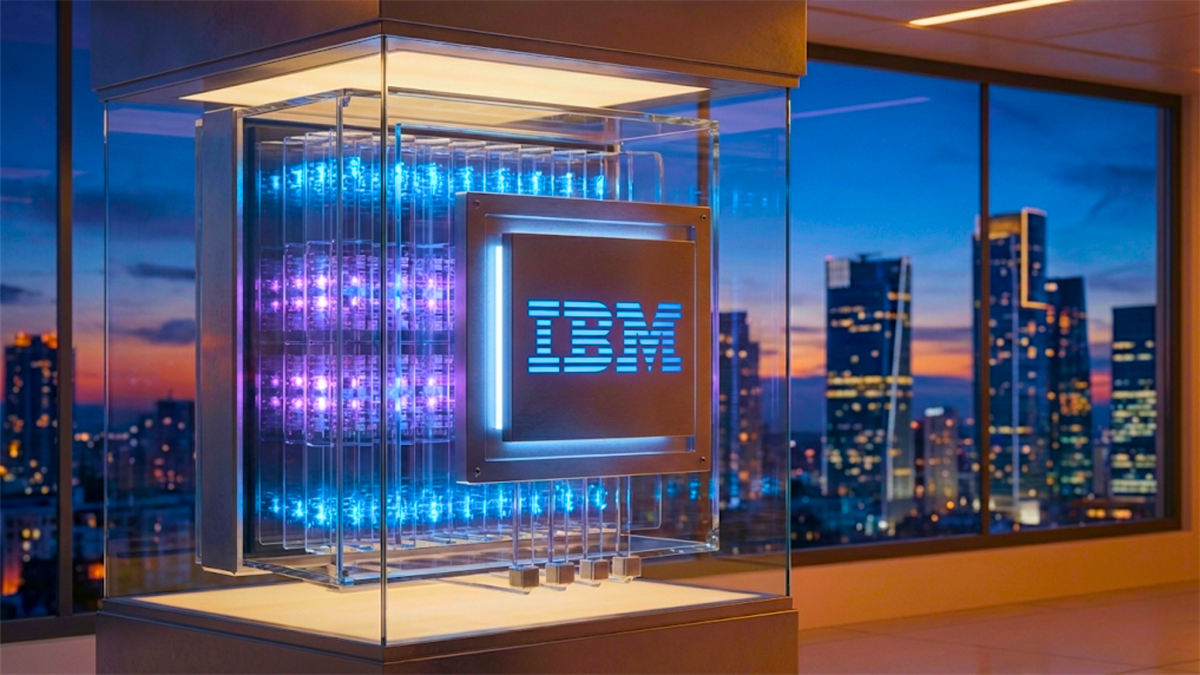
Quick Look - International Business Machines consistently generates exceptional free cash flow to comfortably support ongoing corporate transformation and reliable shareholder dividend payouts.
- Strategic acquisitions strongly enhance hybrid cloud architecture and provide a robust foundation for future enterprise technology expansion.
- Proprietary artificial intelligence innovations allow clients to safely modernize their legacy code directly on highly secure mainframe platforms.
A sudden collision between cutting-edge artificial intelligence (AI) startups and legacy enterprise infrastructure wiped out billions in shareholder wealth. On Feb. 23, 2026, International Business Machines (NYSE: IBM) suffered its steepest single-day decline since 2000. Shares plunged 13.2%, erasing roughly $30 billion in market value in a matter of hours. The trigger was a single product announcement from AI startup Anthropic. The company revealed new features for Claude Code, including tools that claim to automate the modernization of COBOL — the decades-old language that still powers large parts of the global financial system. Investors feared automated code translation would immediately undercut the lucrative infrastructure and consulting revenues tied to maintaining those systems. That panic sparked a sector-wide sell-off, pulling down major IT service providers. Since entering the market in 1982, Louis Navellier predicted nearly every twist and turn in U.S. stocks, from Black Monday and the dot-com crash to the housing crisis and the rise of Nvidia in 2005. That's why the New York Times calls him an icon among growth investors. Since 1998, his proprietary system would've returned 13,126% in backtests, 13X the S&P and 106 times the average investor. Now he's uncovered one investment involving President Trump's plan to lead the world in artificial intelligence, a closely guarded high-tech facility Elon Musk is building in Memphis, and a paradigm shift that could add as much as $23 trillion to the global economy, and he's investing $358 million of his own firm's money in the outcome. Get the name and ticker of Louis Navellier's free pick now The rout, however, appears to be cooling. IBM stock rebounded the next day, closing up 2.68% at $229.34 on heavy trading of more than 13.3 million shares. Major Wall Street analysts, including teams at Wedbush and Evercore ISI, quickly defended the stock, calling the plunge an unwarranted overreaction and a buying opportunity for investors who understand enterprise technology dynamics. Why AI Cannot Replace a Mainframe Enterprise clients cannot simply abandon mainframes because a new AI tool can translate legacy code into a modern language. Translating code syntax is not the same as modernizing a deeply integrated hardware-software architecture. The structural moat around IBM's Z-series mainframes remains intact. A basic software-as-a-service tool running on a public server cannot replicate the hardware-level guarantees required by the world's largest institutions. Current-generation mainframes are purpose-built from silicon up to deliver unmatched transactional resilience: - Massive scale: A single system can process 25 billion encrypted transactions per day.
- AI speed: The platform supports 450 billion AI inferences per day with one-millisecond response times.
- Extreme reliability: The hardware operates with up to eight nines of availability.
- Future-proof security: The system includes quantum-safe encryption to guard against future cyber threats.
More than 90% of the world's credit card transactions currently run through these specialized systems. Regulated entities — global banks, insurers and governments — are highly unlikely to move their most sensitive operational data to third-party public clouds because of data sovereignty, compliance and security risks. In fact, AI can strengthen this protective moat rather than erode it. IBM already offers a dedicated generative AI tool, watsonx Code Assistant for Z, which lets clients safely refactor and modernize legacy code directly on the platform without compromising enterprise-grade security. Pristine Financials Hidden in the Noise The market panic obscured the company's underlying financial performance. Before the AI-driven sell-off, fourth-quarter 2025 results showed broad-based growth that beat expectations: - Earnings beat: Adjusted EPS of $4.52 versus consensus of $4.33.
- Revenue surge: Q4 revenue of $19.7 billion, up 12% year over year.
- Segment strength: Software revenue rose 14% and Infrastructure revenue jumped 21%.
- Record cash: Free cash flow for the full year reached a record $14.7 billion, up $2 billion from the prior year.
The business is growing and generating significant cash despite the market noise. The company's generative AI business now exceeds $12.5 billion — roughly $10.5 billion in consulting and $2 billion in software — demonstrating successful monetization of AI within the regulated enterprise sector. Management is also deploying capital to strengthen the high-margin software portfolio. Strategic acquisitions of HashiCorp ($6.4 billion) and Confluent (NASDAQ: CFLT) ($11 billion) enhance hybrid-cloud capabilities. To further its AI positioning, IBM recently announced a major collaboration with Deepgram to integrate advanced voice AI into enterprise solutions. A 3% Dividend Yield Built on Rock-Solid Cash The sharp decline in IBM's share price compressed the stock's valuation. The trailing price-to-earnings ratio has fallen to roughly 20.5, making the stock a more reasonable entry point than earlier this year. Because yields move inversely to price, the pullback lifted the dividend yield to about 2.93%. Management has a 30-year track record of consecutive annual dividend increases. That payout is well supported by growing free cash flow detailed in the recent report. For 2026, guidance calls for more than 5% constant-currency revenue growth and an additional $1 billion in free cash flow, signaling confidence in the ongoing transformation. While the market focuses on short-term disruption narratives and headline-grabbing startup announcements, the underlying metrics tell a different story. The financials remain strong, and the core infrastructure is far more defensible than basic code translation implies. For patient investors, the volatility has created a meaningful discount to buy shares of a profitable, cash-generating, entrenched technology leader.
|