The market is moving on… Ships are moving through the Strait of Hormuz… From one scare to another... Former Fed Chair Alan Greenspan passes... 'Irrational exuberance' lives...
 Ships are on the move... Ships are on the move...
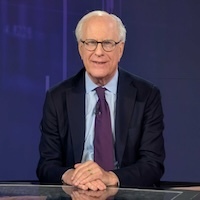
Over the weekend, a new window of negotiations between U.S. and Iranian officials commenced in earnest in Switzerland. At the same time, more than a dozen cargo vessels traveled through the Strait of Hormuz each day – a pace not seen in months. Publicly available data confirmed more than 70 transits. And the trend continued over the past 24 hours, according to HormuzStraitMonitor.com, an aggregation of various real-time sources for the waterway. That's good, but it's still less than half the "normal" prewar volume. Slowly – and not quite surely – things may get there. Representatives from Pakistan and Qatar, which are helping mediate the talks between the U.S. and Iran, said the latest round of talks started off well with the parties agreeing on a "road map." This follows the memorandum of understanding that the parties reached about a week ago. Vice President JD Vance says Iran has agreed to let nuclear inspectors into the country and open strait transit. In turn, the U.S. Treasury Department announced today it won't stop or sanction anyone trying to produce, buy, or sell Iranian oil for the next 60 days. Translation: money for Iran. Meanwhile, though, a prominent Iranian state-media outlet today disputed several of the reported points and the chummy tone. This may signal a power struggle still unfolding in Iran that could disrupt the peace process. 'War-risk unwind' – sort of...Oil futures dropped by another 3% to 4% today as traders prepare for Middle Eastern supplies to reenter the market. International Brent crude August contracts are now near $78 per barrel and West Texas Intermediate's July futures are around $74, their lowest levels since early March. But at the same time, the markets are looking to the "next thing"... That's the idea of high(er) inflation and maybe higher interest rates, in part as a result of the energy-supply disruptions we've already seen and new signals from the Federal Reserve. Despite the positive reports from Switzerland, bond yields were higher across the curve today, with the 10-year Treasury up about 5 basis points to near 4.51% and the 30-year pushing 4.95%. Remember, rising bond yields mean falling bond prices. Meanwhile, the major U.S. stock indexes were mixed. The benchmark S&P 500 was down slightly and is below its record high set earlier this month. But the small-cap Russell 2000 Index gained around 1% and is trading at an all-time high. What else to watch this week...Related to the Iran talks, the market will digest a fresh round of inflation data on Thursday: the May personal consumption expenditures ("PCE") index. Market expectations are for 0.4% growth for the month and a 3.8% year-over-year reading. Later that day, we'll also hear commentary from New York Fed President John Williams and Chicago's Austan Goolsbee, marking the first time central bank "underlings" will make public comments since Kevin Warsh took over as Fed chair... Apart from that, we're continuing to track the blistering run from tech stocks and what could be another trend-defining week. The sector has been on the rise again over the past few weeks but is still just below the high it made earlier this month. After Wednesday's close, computer-memory and data-storage business Micron Technology (MU) will report earnings. This could influence some short-term direction, and the numbers will likely make headlines – again. Ahead of earnings, Micron this morning announced a new "strategic agreement" with Anthropic to build AI infrastructure. This includes an investment in Anthropic's Series H funding round, as the maker of the Claude system gets closer to its IPO. It's yet another "circular" deal in the AI boom. Speaking of IPOs...SpaceX (SPCX) is now down almost 30% in a week... It's precisely the kind of volatility we warned could happen following the typical high-profile IPO "pop" after the stock went public on June 12. SpaceX jumped more than 60% from its IPO price, but it's heading back down. Today, shares dipped 16% on news that SpaceX had launched its first-ever senior unsecured bond offering. The money will repay bridge-loan borrowings tied to debt refinancing in its X social media business and AI funding. Who could have guessed... Count us out of that bond and of the stock right now. Even with a 20% cut, SpaceX shares are still trading at an absurd $2 trillion valuation, around 105 times its trailing 12-month revenue of around $19 billion. The unfortunate thing is that, despite this, we're getting closer to tens of millions of folks being forced to buy the stock – whether they want to or not. Our colleagues Whitney Tilson and Gabe Marshank have been explaining the whole story. In short, SpaceX is being "fast tracked" to retirement accounts, and they say this is a looming disaster for millions of Americans. If you haven't already watched their presentation, check it out now before it goes offline. A melancholy final note...Alan Greenspan, the economist who chaired the Federal Reserve for five terms and under four presidents, passed away earlier today. Greenspan was 100. His NBC obituary reads...
Greenspan helped define modern American capitalism from the final years of the Cold War-era through the dawn of the digital age. He presided over the Fed during one of the longest economic expansions in U.S. history, a boom stretching from 1991 to 2001. But he was also faulted for decisions that critics say created the conditions for the global financial crisis of 2007-08, such as advocating for deregulation of the financial sector.
Way back in the 1950s, Greenspan also associated with Atlas Shrugged writer Ayn Rand. Greenspan embraced some of her laissez-faire beliefs and wrote about her influence on him in his 2007 memoir, The Age of Turbulence: Adventures in a New World. Later, though, his moves to support financial markets after the "Black Monday" crash in October 1987 became known as the "Greenspan put" or later, the "Fed put." It's the idea that the Fed would always find a way to bail out stocks in a crisis. But perhaps Greenspan will be best remembered for his two-word phrase "irrational exuberance." He first used the term – which he said he thought of while taking a bath – in a speech in December 1996 about central banking, saying...
Clearly, sustained low inflation implies less uncertainty about the future, and lower risk premiums imply higher prices of stocks and other earning assets. We can see that in the inverse relationship exhibited by price/earnings ratios and the rate of inflation in the past.
But how do we know when irrational exuberance has unduly escalated asset values, which then become subject to unexpected and prolonged contractions as they have in Japan over the past decade?
Greenspan's phrase about wild valuations became investor shorthand for a stock market bubble, and his comments became known as a warning about the dot-com days. But the practical lesson to share might be about the timing of his words... Greenspan was talking about "irrational exuberance" in December 1996. Markets around the world responded to his cue, falling the day after his speech. But stocks got more expensive and the market got crazier for several years before the dot-com bubble peaked in 2000. This reminds us of another quote from, from another late, famous economist, John Maynard Keynes: "Markets can remain irrational longer than you can remain solvent."
| Recommended Links: |
|
 How to Protect Yourself From SpaceX 'Devastation' SpaceX recently went public... but the most important day for this controversial stock is on July 6. That's when Whitney Tilson – the man CNBC nicknamed "The Prophet" – says Elon Musk's new stock will "devastate millions of older Americans." Just last week, Whitney went live with an emergency briefing to show you how to "opt out" before it's too late. Find all the details here. |
|
|
New 52-week highs (as of 6/18/26): Applied Materials (AMAT), Arm Holdings (ARM), ASML (ASML), Alpha Architect 1-3 Month Box Fund (BOXX), iShares MSCI Emerging Markets ex China Fund (EMXC), iShares MSCI Spain Fund (EWP), iShares MSCI South Korea Fund (EWY), Franklin FTSE Japan Fund (FLJP), W.W. Grainger (GWW), Hawthorn Bancshares (HWBK), iShares Convertible Bond Fund (ICVT), Intel (INTC), Taiwan Semiconductor Manufacturing (TSM), Twist Bioscience (TWST), and State Street Industrial Select Sector SPDR Fund (XLI). In today's mailbag, thoughts on last week's Federal Reserve meeting and "first message" made by the central bankers under Kevin Warsh... Do you have a comment or question? As always, e-mail us at feedback@stansberryresearch.com. "So, what did I miss? It appears to me that the Fed is saying we are already in or entering a recession. [You wrote about the Fed's quarterly Summary of Economic Projections ("SEP")]...
The Fed raised its core inflation outlook for 2026 to 3.3% from 2.7%, for 2027 to 2.5% from 2.2%, and for 2028 to 2.1% from 2%.
As for economic growth, the Fed lowered its GDP growth outlook for 2026 to 2.2% from 2.4%, but kept its growth outlook the same in 2027, and raised it to 2.2% in 2028 from 2.1%.
"These projections show declines in inflation adjusted GDP for 2026 and 2027, and projected stagnation for 2028." – Subscriber Gerry N. Corey McLaughlin comment: Well, "recession" depends on your definition, I suppose, but we won't get hung up on the formalities. The important signal to me is that high(er) inflation is a feature (and a bug) of the economy once again. All the best, Corey McLaughlin with Nick Koziol
Baltimore, Maryland
June 22, 2026
Stansberry Research Top 10 Open Recommendations
Top 10 highest-returning open stock positions across all Stansberry Research portfolios. Returns represent the total return from the initial recommendation.
| Investment |
Buy Date |
Return |
Publication |
Analyst |
MSFT
Microsoft |
11/11/10 |
1,309.6% |
Retirement Millionaire |
Doc |
MSFT
Microsoft |
02/10/12 |
1,227.0% |
Stansberry's Investment Advisory |
Porter |
ADP
Automatic Data Processing |
10/09/08 |
846.0% |
Extreme Value |
Ferris |
GOOGL
Alphabet |
12/15/16 |
807.3% |
Retirement Millionaire |
Doc |
ALS-T
Altius Minerals |
03/26/09 |
802.0% |
Extreme Value |
Ferris |
BRK.B
Berkshire Hathaway |
04/01/09 |
780.5% |
Retirement Millionaire |
Doc |
CIEN
Ciena |
10/20/22 |
777.5% |
Stansberry Innovations Report |
Engel |
WRB
W.R. Berkley |
03/15/12 |
624.3% |
Stansberry's Investment Advisory |
Porter |
SII
Sprott |
01/11/18 |
564.7% |
Extreme Value |
Ferris |
LITE
Lumentum |
04/15/21 |
558.0% |
Stansberry Innovations Report |
Engel |
Please note: Securities appearing in the Top 10 are not necessarily recommended buys at current prices. The list reflects the best-performing positions currently in the model portfolio of any Stansberry Research publication. The buy date reflects when the editor recommended the investment in the listed publication, and the return shows its performance since that date. To learn if a security is still a recommended buy today, you must be a subscriber to that publication and refer to the most recent portfolio.
| Top 10 Totals |
| 3 |
Extreme Value |
Ferris |
| 3 |
Retirement Millionaire |
Doc |
| 2 |
Stansberry Innovations Report |
Engel |
| 2 |
Stansberry's Investment Advisory |
Porter |
Top 5 Crypto Capital Open Recommendations
Top 5 highest-returning open positions in the Crypto Capital model portfolio
| Investment |
Buy Date |
Return |
Publication |
Analyst |
BTC/USD
Bitcoin |
11/27/18 |
1,582.4% |
Crypto Capital |
Wade |
WSTETH/USD
Wrapped Staked Ethereum |
12/07/18 |
1,493.7% |
Crypto Capital |
Wade |
ONE/USD
Harmony |
12/16/19 |
998.3% |
Crypto Capital |
Wade |
POL/USD
Polygon |
02/26/21 |
637.6% |
Crypto Capital |
Wade |
QRL/USD
Quantum Resistant Ledger |
01/19/21 |
372.7% |
Crypto Capital |
Wade |
Please note: Securities appearing in the Top 5 are not necessarily recommended buys at current prices. The list reflects the best-performing positions currently in the Crypto Capital model portfolio. The buy date reflects when the recommendation was made, and the return shows its performance since that date. To learn if it's still a recommended buy today, you must be a subscriber and refer to the most recent portfolio.
Stansberry Research Hall of Fame
Top 10 all-time, highest-returning closed positions across all Stansberry portfolios
| Investment |
Duration |
Gain |
Publication |
Analyst |
| Nvidia (NVDA)^* |
5.96 years |
1,466% |
Venture Tech. |
Lashmet |
| Microsoft (MSFT)^ |
12.74 years |
1,185% |
Retirement Millionaire |
Doc |
| Ciena (CIEN)^ |
3.57 years |
1,183% |
Innovations Report |
Engel |
| Inovio Pharma. (INO)^ |
1.01 years |
1,139% |
Venture Tech. |
Lashmet |
| Rocket Lab (RKLB)^ |
2.35 years |
1,034% |
Venture Tech. |
Lashmet |
| Seabridge Gold (SA)^ |
4.20 years |
995% |
Sjug Conf. |
Sjuggerud |
| Lumentum (LITE)^ |
5.09 years |
851% |
Innovations Report |
Engel |
| Berkshire Hathaway (BRK-B)^ |
16.13 years |
800% |
Retirement Millionaire |
Doc |
| Intellia Therapeutics (NTLA) |
1.95 years |
775% |
Amer. Moonshots |
Root |
| Rite Aid 8.5% bond |
4.97 years |
773% |
True Income |
Williams |
^ These gains occurred with a partial position in the respective stocks.
* Editor Dave Lashmet closed the first leg of this Nvidia position in November 2016 for a gain of about 108%. Then, he closed the second leg in July 2020 for a 777% return. And finally, in May 2022, he booked a 1,466% return on the final leg. Subscribers who followed his advice on Nvidia could've recorded a total weighted average gain of more than 600%.
Stansberry Research Crypto Hall of Fame
Top 5 highest-returning closed positions in the Crypto Capital model portfolio
| Investment |
Duration |
Gain |
Publication |
Analyst |
| Band Protocol (BAND) |
0.31 years |
1,169% |
Crypto Capital |
Wade |
| Terra (LUNA) |
0.41 years |
1,166% |
Crypto Capital |
Wade |
| Polymesh (POLYX) |
3.84 years |
1,157% |
Crypto Capital |
Wade |
| Frontier (FRONT) |
0.09 years |
979% |
Crypto Capital |
Wade |
| Binance Coin (BNB) |
1.78 years |
963% |
Crypto Capital |
Wade |
|