
Whoever said “brevity is the soul of wit” never ran for Senate in Maine. Days after he was accused of sexual assault—and weeks after the first reports of his suspect behavior towards women raised worries that more serious allegations could emerge—Graham Platner announced yesterday that he was suspending his campaign. But, in keeping with the train-wreck-in-quicksand vibe, his announcement video was long and discursive, and devoid of self-reflection or apologies. Maine Democrats are now planning a last-minute convention of roughly six hundred representatives from around the state to choose who will replace Platner on the November ballot. Happy Thursday.
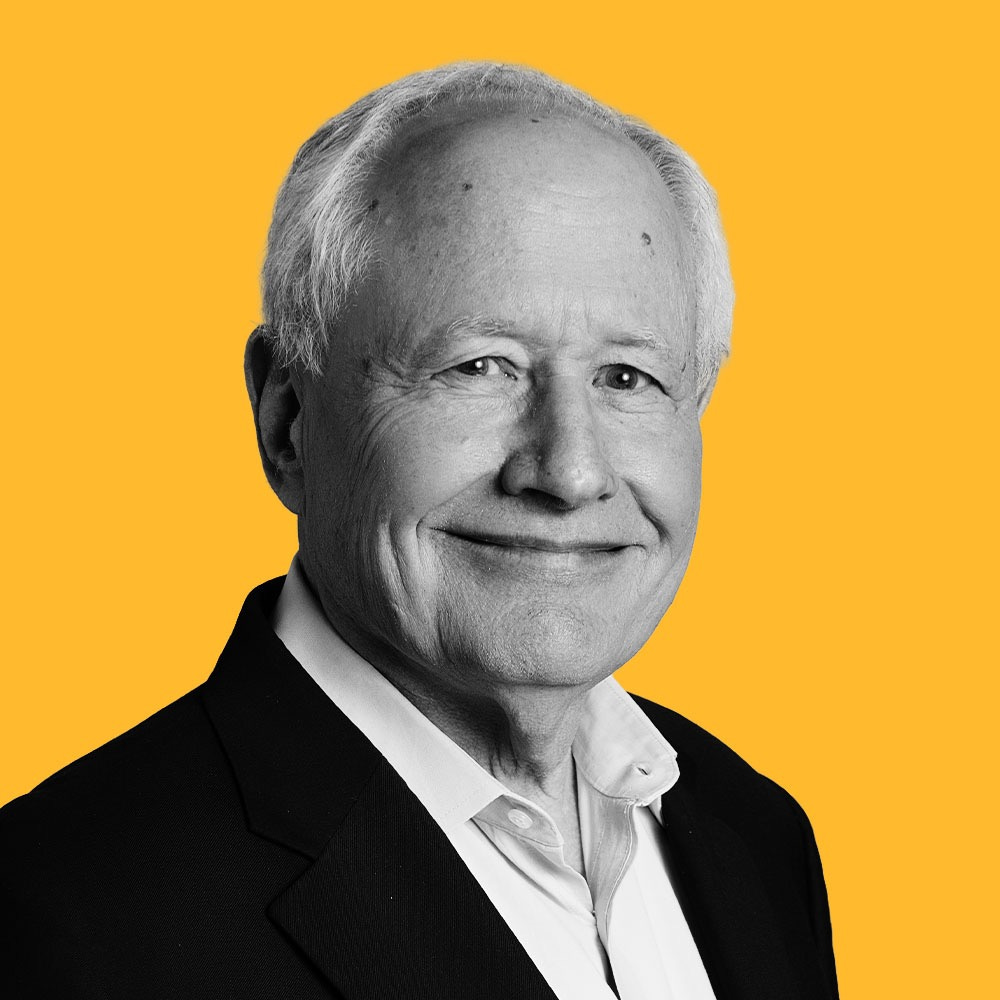
What We Learn from Immigrantsby William Kristol Lorenzo Salgado Araujo, killed by agents of our government while driving to work early Tuesday morning in Houston, was fond of telling his three sons, “Que siempre le echemos ganas en esta vida.” The Washington Post offers this rough translation: Give it your all, and never give up. This is a Mexican proverb. But who hasn’t heard similar sentiments expressed by other immigrants from other places at other times and in other languages? We native-born Americans often have it relatively easy. We can be quick to grumble when the going gets tough. It’s often our immigrants who remind us that the better response to life’s challenges is unstinting effort and determined perseverance. And so it’s often immigrants who remind us about the importance of work. Ronaldo Salgado, Lorenzo’s eldest son, emphasized yesterday that his father was “a man who understood that good things come to those who put in hard work.” It’s often immigrants who remind us about family. Araujo’s son said yesterday that his late father was “a family man” and that yesterday was “the first day without him for all of us, and it is heartbreaking to know that my mom did not make lunch for my dad before going to work—the first time in their 30+ year marriage.” Araujo worked hard throughout his three decades in the United States so that he could support his family and raise their three sons. “He wanted nothing else in life but to provide for his wife and see his sons become great people,” Ronaldo said. And it’s often from immigrants that we learn about generosity. According to the Post, Araujo was known as someone whose door you could knock on if you were looking for work, and he would help you. “He deserved to live a quiet life as Lorenzo Salgado Araujo, a husband, father and a job creator for dozens of men who also wanted the American Dream,” Ronaldo Salgado said. And it’s from immigrants that we often are reminded about the importance of education. Araujo and his wife had little formal education, but were determined that their three sons would go to college. Ronaldo told The Bulwark’s Adrian Carrasquillo that his father would remind him and his brothers “that we needed to do well in school so we don’t end up like him in the sun.” As Adrian reported, “Ronaldo, 29, graduated from the University of Houston; Lorenzo Jr., 27, from Tufts University; and their youngest brother is in college now.” It is these young men who are calling for a full and honest investigation into why a peaceful and law-abiding man was killed while driving to work by agents of our government. It is they who are seeking the truth about what happened and asking the public to come forward with any new video or images that might shed light on their father’s death. It is they who are trying to hold our government to American standards of responsiveness and accountability and decency. And it is our government that is stonewalling and covering up, refusing so far to provide any information at all about what happened Tuesday morning in Houston. It is our government that appears to be blocking independent investigations by the Justice Department or by local authorities. But not to worry: The Department of Homeland Security inspector general, we are assured, will add this case to the more than 600 complaints of misconduct by DHS employees that his office is now investigating. We should be grateful that Ronaldo Salgado Araujo came to live here in the United States, to build houses for Americans, and to raise three American sons. Araujo was not yet an American citizen, though he had in the last eighteen months filled out paperwork and provided documentation, references, and fingerprints in an effort to regularize his immigration status. But he had lived as an American, de facto if not de jure, for the last thirty-five years. As his son said, he had sought to live the American Dream and to help others to do so. His son also remarked, “My father was always a strong man and never wanted us to know if he was in pain. He never complained.” Our current government, by contrast, is led by weak men who constantly complain, and who benefit from exploiting other Americans’ weaknesses and anxieties. Our current leaders talk endlessly about American exceptionalism, while turning us into an unexceptional country presided over by thuggish apparatchiks. I dare say Ronald Salgado Araujo was a better American than they are. AROUND THE BULWARK
Quick HitsIRAN WAR COSTS: There are many ways of tallying the costs of the Iran war. One is in the dollars it’s cost the U.S. government. Another is in the thirteen Americans who gave their lives and many more who sustained injuries. Iranians themselves are probably considering not only their own dead and wounded, but their oppressive government’s new sense of invincibility. The Pentagon is surely counting up the scarce munitions the war is eating up—as, no doubt, are the Iranians, the Chinese, the Russians, and others. One could point to the price of gas, or fraying American alliances in Europe, the Middle East, and Asia. The International Monetary Fund has its own measure. The New York Times explains:
The global population is expected to grow much more slowly this year, at less than 1 percent. So overall GDP per capita will still probably rise, which is a good thing. But these estimates are all subject to, for example, renewed hostilities in and around the Strait of Hormuz, which seems to be a thing that happens about once a month, give or take. As for the benefits of the Iran war, we’ll list those when there are some. COME IN, MITCH: We wrote yesterday about the bizarre moment in which, in an apparent attempt to dispel Laura Loomer’s rumors¹ that Sen. Mitch McConnell was braindead, Sens. John Thune and John Barrasso told reporters that they had discussed Senate business and the Supreme Court with McConnell on the phone. “There is something inherently odd about all this,” we wrote yesterday. “McConnell could resolve a lot of confusion if he spoke publicly, even via a voice recording.” Turns out we weren’t the only ones scratching our heads. So was Kentucky Gov. Andy Beshear, who sent a letter to McConnell yesterday that read, in part,
As of publication time, McConnell had not responded. Nor, for that matter, had anyone else come forward to relay that they’d also spoken with him on the phone. THE MULLAHS AND THE MONEY: CNN’s Aaron Blake has an analysis of why Trump’s Iran war feels like the same humiliating defeat over and over again:
Read the whole thing. Yes, Trump definitely misread the Iranians’ capacity to endure pain against his own. But maybe, more precisely, he misidentified what kind of pain really hurt the Iranians by assuming it was the kind of pain that hurt him. Trump has repeatedly harped on Iran’s inability to sell oil because of the American blockade of Iran’s ports, threatened to seize Kharg Island with its oil export infrastructure, and boasted that “their economy is crashing” and “we’re making it fail.” He explained: “I hope it fails. . . . You know why? Because I want to win. You know, it takes getting pounded on by the military, I think, for more. But in addition to that, their—it is failing. You know, we have sanctions on them . . .” Money clearly matters to Trump. It matters to every world leader to some extent, because it’s much easier to have it than not to. But a clique of violent religious fundamentalist fanatics who are willing to endure power shortages, water shortages, rampant inflation, and sanctions that the first Trump administration itself described as “maximum pressure” even before the war—those guys probably are less concerned about the profit/loss statement than Trump. One way of thinking about the Iran war is that the austere religious zealots have been less sensitive to economic pain than the billionaire New York developer turned professional fraudster. Who’s surprised? Cheap Shots
1
Funny how that rhymes. You’re a free subscriber to The Bulwark—the largest pro-democracy news and analysis bundle on Substack. For unfettered access to all our newsletters and to access ad-free and member-only shows, become a paying subscriber.We’re going to send you a lot of content—newsletters and alerts for shows so you can read and watch on your schedule. Don’t care for so much email? You can update your personal email preferences as often as you like. To update the list of newsletters or alerts you received from The Bulwark, click here. Having trouble with something related to your account? Check out our constantly-updated FAQ, which likely has an answer for you.
|