
| Unsubscribe |
I wish this wasn’t the case…
But it’s happening, exactly as I predicted.
I first warned my readers of this threat months ago. Many disregarded it.
Now it’s accelerating and unless you prepare now you could be blindsided by an event two Nobel Prize winners have warned of… an event that you cannot ignore.
The clock is ticking. Just take a look:
In a single month, March of this year, U.S. employers announced 60,620 job cuts. That's a 25% jump from February. And one force was named as the reason why.
Then the floodgates really opened.
Meta announced it's laying off roughly 8,000 employees – 10% of its workforce – and quietly killing another 6,000 unfilled roles.
The same week, Microsoft offered "voluntary separation" to 7% of its U.S. workers — more than 8,500 people.
Translation: quit on your terms, or we'll fire you on ours.
And they're not alone. Not by a long shot.
Amazon cut 16,000 corporate jobs… Block cut 40% of its workforce…. Salesforce eliminated 44% of its support team... Oracle is reportedly axing up to 30,000 roles.
IBM, Snap, Pinterest, Klarna… the list grows by the week.
Almost 80,000 tech jobs evaporated in the first three months of 2026 alone.
Although most people think this is about AI… it’s not. The story goes far deeper and is far more consequential. It’s something that I’ve been warning off for months now.
And I’m not the only one.
Two Nobel Prize winners have warned of this Final Displacement.
Because they know, as I do, this event could trigger a once-in-a-generation wealth shift.
A transfer of wealth that’s already begun with Goldman Sachs estimating 12,400 Americans are being financially destroyed every day… while others grow richer than ever before.
Which side you’re on could depend on what you do next.
Because for those who understand what’s unfolding, this could be one of the greatest wealth-building phenomena of their lives.
But for those who bury their head in the sand… this force threatens to wipe out years of investment returns and could even destroy their financial future.
Here’s the full story for you.

26 years ago, I started telling friends, family, and anyone who would listen about an unprecedented societal shift that was barreling down on us.
I’d discovered that a new technology was about to unleash massive, almost unimaginable, changes. I likened the impact to the railroad boom, the Industrial Revolution, and the rise of personal computing.
At the time, I was working as an investment analyst for an elite research group, but my colleagues and bosses refused to listen to me.
No matter what I said, they simply would not acknowledge the sands shifting beneath their feet.
The legendary Dr. Kurt Richebächer – one of the world’s leading Austrian economists – even called me and my ideas “radical.”
But I was certain this new technology would trigger a transformation that was simply unfathomable to most people… and those on the frontier could reap financial returns unlike any the world had ever seen before.
So, I decided to put my entire career – not to mention every cent I had – on the line to spread the story myself.
I left my job as a research analyst… went home to my third-floor apartment in one of Baltimore’s worst neighborhoods… and with a borrowed laptop, I wrote my first financial prophecy.
And in an investment paper that’s now been read by more than one hundred thousand people…
I explained how the endless miles of new fiber optic cables being laid was creating a new railroad across America.
And that this new “railroad” was going to upend the telecommunications industry and pave the way for a new internet economy.
I also warned it would decimate some of America's most dominant companies like AT&T.
At the time, this was an outlandish idea, with analysts calling AT&T “dominant”, “unstoppable”, and “the giant that no other company can topple.”
But those who were willing to open their minds to my so-called “radical” ideas were not only able to sell these companies before they collapsed…
They also had the chance to get in early on the firms that would go on to command this new internet economy:
Amazon, Adobe, Qualcomm, SunMicrosystems, Uniphase, Texas Instruments… These are household names now, but when I first recommended them in the late 90s, they were complete unknowns.
Since then, I’ve issued a number of other financial prophecies, many of which have come to pass precisely as I predicted.
But today, I’m stepping forward with a new exposé that I believe could surpass anything I’ve ever done…
It’s an investigation into what I call The Final Displacement… and I don’t think we will ever again see a story that rivals the magnitude of this during my lifetime.
I’m not talking about AI… quantum computing… augmented reality… the blockchain… or anything else you might be thinking of.
No. This is far bigger than them all. In fact…
It’s the cornerstone that all our recent technological innovations have been built upon and the future will be built upon too.
Yet you’ve likely never heard of it before.
Outside of the labs in the world’s most prestigious universities and tech companies, almost nobody has.
But those who have… those who can see the writing on the wall… they’re investing billions of dollars, as they know this will transform everything.
Marc Andreessen… Ben Horowitz… Elon Musk… Jeff Bezos… Mark Zuckerberg…Jensen Huang… Bill Gates… the list goes on and on.
They know, as I do, that in a few years from now, we will not recognize the world we live in.
How we work, live, communicate, transact… it will all be completely upended by what’s coming next.
Today, I’m going to share it all with you… and I promise you’ve never heard anything like this before.
You see, despite the magnitude of this story, nobody is openly and freely discussing this turning point. And that deeply concerns me, because I believe its emergence will draw an indelible demarcation line in society.
On one side, you’ll have those who understand it, invest in it, and who are greatly enriched by it.
On the other side… you’ll have those who underestimate it, turn a blind eye and are unfortunately impoverished by the sweeping changes it ushers in.
I know what side I’ll be on.
And I know what side I want you to be on.
So go here to watch my full investigation into this story.
Including the names of the companies to buy and sell if you want to capitalize on the impending multi-trillion-dollar displacement.
Good investing,
Porter Stansberry
Thematic Memory ETFs Give Investors a New Way to Play AI’s Hidden Bottleneck
Submitted by Dan Schmidt. Article Published: 7/23/2026.
Key Points
- Memory stock prices have fallen this month amid stretched valuations, price hike pushback, and a looming $8.6 billion IPO from China's ChangXin Memory Technologies.
- Analysts expect memory shortages to persist until 2027 or 2028, with hyperscalers locked into multiyear contracts that support prices despite recent headwinds.
- Investors can access the memory trade through three ETFs, DRAM, KMEM, and DISK, which differ in concentration, risk, and exposure to HBM versus NAND makers.
- Special Report: Forget SpaceX. Buy the company Musk can't replace.
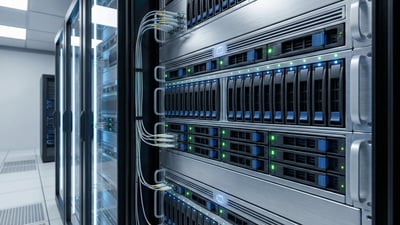
Memory stock prices have had the wind knocked out of them this month as several negative catalysts have converged to rock this suddenly volatile group. The boom lifted many cyclical companies to unprecedented heights, driven by insatiable demand from hyperscalers. But for the first time in a while, cracks have appeared in the story. Valuations among memory chipmakers are stretched, price hikes are facing pushback, and Chinese memory producer ChangXin Memory Technologies is threatening to upend the market with a massive $8.6 billion IPO in Shanghai. Is the memory trade about to be disrupted? Not so fast, my friend.
The Differentiating Aspects of the Memory Shortage
Hyperscalers are hungry for specific types of memory, but this demand has had a cascading effect on the industry. Companies like Micron Technology Inc. (NASDAQ: MU) and Samsung Electronics Co. Ltd. (OTC: SSNLF) have their capacity fully allocated through 2026, and many analysts project memory shortages to last until 2027 or 2028 at the earliest. This supply shortfall is the central theme of the bullish thesis and explains why these recent headwinds are likely to be a short-term blip.
#1 Power Grid Stock Right Now (Ad)
The U.S. power grid is cracking - and one company's technology is already generating round-the-clock power in remote West Texas fields without waiting on the public grid.
Backed by Elon Musk, with Meta, Microsoft, and Google getting involved, this may be the most compelling infrastructure play right now. Satellite images have surfaced that could soon bring wider attention to what's happening on the ground.
Learn why this is our top power grid stock to own right nowThreats of hyperscaler spending slowdowns, Chinese competition, and oversupply are concerns for the coming years. However, the reality is that memory suppliers are entrenched in lucrative, multiyear contracts with deep-pocketed hyperscalers. Typically, memory chip prices fluctuate as supply ebbs and flows, but these long-term deals also lock in prices for extended periods, providing longer runways for high-margin sales.
It’s important to understand the different types of memory chips these companies produce, since the type of memory matters when selecting a fund. Here are the main components in the data center memory stack:
Dynamic Random-Access Memory (DRAM) - The active working memory found in most computers, tablets, and mobile devices, which stores data on capacitors. DRAM is a volatile form of memory that must remain connected to a power supply to retain information, but its high speeds and low latency have led it to dominate the memory chip market.
High-Bandwidth Memory (HBM) - A specialized type of DRAM that’s increasingly crucial to the AI data center supply chain. HBM uses a 3D stack to arrange memory chips vertically, reducing power consumption and creating the bandwidth that hyperscalers find attractive. HBM has emerged as a core component in the AI buildout, and only Micron, Samsung, and SK Hynix Inc. (NASDAQ: SKHY) are currently capable of producing it.
NOT-AND Flash (NAND) - NAND flash memory chips are nonvolatile, meaning they retain data even after the power source is cut off. Users of NAND memory care more about efficient storage than high speeds, and it is primarily used in hard disk drives (HDDs) and solid-state drives (SSDs) sold by companies like Seagate Technology Holdings PLC (NASDAQ: STX). HBM might be the headline demand from data centers, but storing training data also requires nonvolatile memory with high storage capacity.
3 ETFs Offering Unique Ways to Play the Memory Stock Surge
Your opinion on the next direction of the memory trade will determine which funds fit your portfolio. Each of these ETFs follows a different thesis, but their underlying holdings do have significant overlap. Remember, these memory ETFs are still relatively small, so you can expect volatility and wide spreads no matter which fund you select.
Roundhill Memory ETF: High Liquidity Fund With Focused HBM Exposure
The group's veteran fund is still just a few months old, but the Roundhill Memory ETF (BATS: DRAM) has already amassed more than $20 billion in assets under management (AUM) and developed a healthy options market. More than 42 million shares trade daily on average, and its 0.65% expense ratio isn’t excessive for a fund this uniquely tailored.
The ETF holds 23 assets in total, with its highest concentrations in the South Korean HBM producers SK Hynix and Samsung. It also allocates smaller shares to flash memory producers like Seagate and Western Digital Corp. (NASDAQ: WDC) and maintains liquidity through Treasury holdings. An investment in DRAM is a concentrated bet on HBM, with a sprinkling of NAND, but offers less volatility and risk than our next fund.
Kurv Memory Select ETF: High Risk Through Highly Concentrated HBM Exposure
The Kurv Memory Select ETF (BATS: KMEM) began trading on June 30 and currently has less than $50 million in AUM. But if you have high conviction that the HBM supply shortage will last for multiple years, KMEM may offer the highest upside.
The fund is heavily concentrated: SK Hynix, Samsung, and Micron account for nearly 80% of its holdings, with more than 41% allocated to SK Hynix alone. Despite its low AUM, the fund matches DRAM’s 0.65% expense ratio, which is again fair for a thematic ETF. KMEM investors should prepare for high volatility and be comfortable with a new, risky vehicle.
Tema Memory ETF: Broader Exposure Across the Memory Ecosystem
The Tema Memory ETF (NYSEARCA: DISK) uses its stock ticker to reflect its broader approach to the memory chip industry. The fund has 22 stock holdings, none of which account for more than 18% of the portfolio. You’ll get NAND flash makers like Seagate, Western Digital, and SanDisk Corp. (NASDAQ: SNDK), along with HBM makers like Micron, Samsung, and SK Hynix.
The fund also offers exposure to companies that don’t trade on U.S. exchanges, such as Kioxia Holdings and Nanya Technology. The expense ratio is high at 0.75%, but the fund has amassed more AUM ($76 million) than KMEM over the same period and offers much broader industry exposure than the other two funds. If you don’t want to be overexposed to hyperscalers, consider DISK over DRAM and KMEM.
Amazon’s AI Spending Is About to Face Its Most Important AWS Test Yet
Author: Sam Quirke. Publication Date: 7/20/2026.

Key Points
- Amazon investors are looking for evidence that heavy artificial intelligence infrastructure spending is translating into faster AWS growth.
- Some analysts expect AWS revenue growth to accelerate in the second quarter as capacity constraints ease.
- Retail and logistics growth could give Amazon another source of support if cloud revenue and margins meet expectations.
- Special Report: Forget SpaceX. Buy the company Musk can't replace.
For most of this year, the conversation around Amazon.com Inc. (NASDAQ: AMZN) has been dominated by one uncomfortable question: Will all that AI spending ever pay off? The company's enormous infrastructure buildout has compressed free cash flow, unsettled the bond market and left investors waiting for hard evidence that the spending is translating into growth.
That wait may be about to end. Ahead of its next earnings report on July 30, some analysts are forecasting a sharp acceleration in AWS revenue growth, comfortably outpacing broader market expectations. If the numbers come in anywhere close to that, it would provide exactly the proof point the bulls have been seeking.
The Forecast That Changes the Conversation
#1 Power Grid Stock Right Now (Ad)
The U.S. power grid is cracking - and one company's technology is already generating round-the-clock power in remote West Texas fields without waiting on the public grid.
Backed by Elon Musk, with Meta, Microsoft, and Google getting involved, this may be the most compelling infrastructure play right now. Satellite images have surfaced that could soon bring wider attention to what's happening on the ground.
Learn why this is our top power grid stock to own right nowIn a note to clients earlier this month, TD Cowen said it expects AWS revenue growth to reach 35.5% year over year in the second quarter, up from 28.4% in the same period last year and several percentage points above consensus estimates. For a business of AWS's scale, that kind of acceleration would be remarkable and mark a decisive break from the narrative that cloud growth had plateaued.
The necessary capacity is finally catching up with demand. Amazon's heavy investment in AI infrastructure has begun easing the supply constraints that were holding it back. Capacity that simply wasn't available before is now coming online and converting directly into revenue from generative AI workloads.
That distinction matters enormously. The bear case has long held that Amazon was spending speculatively into an uncertain future. An AWS acceleration of this magnitude, arriving now rather than in a year or two, would suggest the opposite: The company has been building to meet demand it could already see.
Why This Would Settle a Bigger Argument
To understand why a single quarter could carry this much weight, it helps to remember what the debate has actually been about. Nobody has seriously questioned whether AI infrastructure demand exists. The question has been whether Amazon specifically can convert its spending into revenue quickly enough to justify the pressure it has placed on the balance sheet.
Free cash flow has taken a visible hit as capital expenditure (CapEx) has climbed, and the company's recent bond raise drew noticeably softer demand than earlier rounds of AI-related debt issuance. Both are symptoms of a market that wants to see returns before extending more patience.
AWS growth in the mid-thirties would go a long way toward providing investors with those returns. It would demonstrate that the capacity being built is being consumed almost as quickly as it comes online, reframing the CapEx story from a worrying outflow to an investment with a visible payback.
The Retail Engine Is Quietly Accelerating Too
Lost in all the focus on cloud is the fact that Amazon's core retail business appears to be picking up pace as well. TD Cowen expects North American revenue growth to come in meaningfully ahead of the first-quarter result, driven by faster delivery speeds and continued strength in everyday essentials.
That matters more than it might first appear. One of the quieter concerns about the AI buildout has been whether it would distract management from the business that actually funds it. An acceleration on the retail side would suggest the opposite: Amazon is running both playbooks at once without either suffering as a result.
It also speaks to the durability of the broader growth opportunity. AWS may be where the excitement lies, but Amazon’s retail and logistics operations remain the foundation on which everything else is built. Evidence that this foundation is strengthening rather than plateauing gives the bulls another reason to be excited ahead of the report.
What Could Still Go Wrong on July 30
To be sure, none of this anticipated upside surprise is guaranteed, and the report could still disappoint even with strong AWS numbers. The most obvious risk is on the spending side. If capital expenditure guidance climbs again, or if management signals that the buildout will run longer and require more spending than expected, investors may focus on cash outflows rather than revenue acceleration.
Margins are the other variable. Rapid AWS growth is only bullish if it comes with the profitability the market associates with the segment, and any sign that the cost of serving AI workloads is compressing returns would take the shine off the headline number.
Get both right, though, and the setup is compelling. A market that has spent months worrying about what Amazon is spending would suddenly be confronted with clear evidence of what that spending is buying. After months of frustrating price action, that could easily be enough to push the stock back toward all-time highs.
This email message is a paid sponsorship provided by Porter & Company, a third-party advertiser of MarketBeat. Why was I sent this message?.
If you have questions or concerns about your subscription, please contact MarketBeat's South Dakota based support team at contact@marketbeat.com.
If you would no longer like to receive promotional emails from MarketBeat advertisers, you can unsubscribe or manage your mailing preferences here.
© 2006-2026 MarketBeat Media, LLC. All rights reserved.
345 N Reid Pl., Suite 620, Sioux Falls, S.D. 57103. United States..


