Thanks to a new law Trump just signed…
Every day until April 2027 the entire GDP of Switzerland will migrate onto Trump's New Money Grid, that's $909 billion. Every single day.
That's every bank account, every fund, every mortgage, every stock trade in America.
Translation: our entire financial system is migrating onto a new blockchain-based Money Grid.
And every dollar that moves burns one scarce asset.
That's why BlackRock, JPMorgan, Goldman Sachs and Fidelity are hoarding shares like it's Black Friday.
Get in on the trade BlackRock, JPMorgan, and Fidelity are already making.
The Nasdaq just got SEC approval to move stocks onto blockchain rails.
BlackRock CEO Larry Fink dedicated his entire 2026 annual letter to it.
The World Economic Forum says 2026 is "a defining moment" for this new financial infrastructure.
Everyone who's actually building this thing is saying the same thing…
This is not a drill. This is the biggest overhaul of America's money system since we stopped using gold coins.
And at the center of it all?
A scarce asset that gets burned every single time a transaction happens.
Block Chain expert Andy Howard is calling it "Digital Oil."
And right now, before this goes mainstream, you can still get in at prices the institutions would love to lock in forever.
Get the name. The ticker. And exactly how to buy here.
Your future looks bright,
Andy Howard
The Edge™ Senior Blockchain Analyst
PS I'm predicting this could potentially be one of, if not THEE most explosive wealth opportunities I've come across. That's why you can't drag your feet here, because once retail investors catch wind of this, it will be too late…
Click here before it's too late to get in on the trade.
Short Sellers Are Piling Into Wingstop, But Analysts See Big Upside
By Jennifer Ryan Woods. Posted: 6/10/2026.
Key Points
- Wingstop shares have fallen more than 65% from their 2024 peak as slowing same-store sales, higher gas prices, and pressure on lower-income consumers weighed on investor sentiment.
- Bearish bets against the stock are rising, with short interest climbing to roughly 5.2 million shares, or about 19% of the company's float, as investors question the pace of a recovery.
- Despite the selloff and rising short interest, Wall Street remains largely bullish, with analysts' average price target implying nearly 90% upside from current levels.
- Special Report: SpaceX is offering you shares. Don't take them.
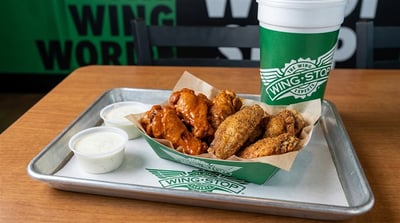
Foodies may love Wingstop Inc.'s (NASDAQ: WING) spicy wings, but the stock has left some investors feeling burned.
Shares have been under pressure since reaching a 2024 peak, and a recent rise in short interest suggests many investors remain skeptical about the company's near-term growth prospects.
Hey, it's Jon Najarian. The SpaceX IPO is right around the corner. But I discovered Elon may have something BIGGER planned. Check this out before June 12th... (Ad)
After being invited to the SpaceX launch headquarters in Cape Canaveral from one of Elon's top lobbyists… Hall of Fame Trader Jon Najarian now says EVERYONE is missing an even bigger story about the SpaceX IPO… That it's just the start of an Elon Musk $44 trillion "Superconvergence…" An event that could kick off as soon as June 12th.
Click here now to watch hall of fame trader Jon Najarian's full prediction.Still, Wall Street isn't ready to send the order back. Analysts see significant upside from current levels, with the average price target sitting well above where the stock trades today. If they're right, the recent selloff could be a good entry point.
Wingstop Shares Have Fallen Sharply Since Their 2024 Peak
Between mid-2022 and 2024, Wingstop was on a roll, and its shares reflected that enthusiasm. Multiple quarters of earnings and revenue beats, along with more than 20 consecutive years of same-store sales growth, helped send the stock from the $70 to $80 range in June 2022 to an all-time high above $433 by the end of September 2024.
Soon after reaching that high, however, momentum began to fade. The stock bounced around over the next year, but by the end of October 2025, it had lost roughly half its value, trading around $215.
Shares remained volatile into early 2026, rallying ahead of and after the company's fourth-quarter earnings report in February. However, they soon reversed course, and the tough consumer backdrop continued to weigh on sentiment.
By mid-May, the stock had fallen to a 52-week low of around $116. Year to date, the stock is down around 40%, and over the last 12 months, it has fallen more than 60%. Since hitting its 2024 high, Wingstop's market cap has fallen from more than $12.5 billion to roughly $3.9 billion.
Winter Weather and Higher Gas Prices Hurt Q1 Results
The first-quarter results reported at the end of April did little to ease investors' concerns. Same-store sales declined again, and while earnings came in ahead of Wall Street's expectations, revenue fell short.
The company largely attributed the weakness to winter weather, which led to multiple temporary restaurant closures, and to higher gas prices, which weighed on consumer spending, particularly among its lower-income core customer base. According to the company, results would have been broadly in line with expectations excluding the impact of those factors.
The expectation that gas prices would remain elevated also weighed on the company's outlook. For the full year, Wingstop said it now expects domestic same-store sales to decline by a low-single-digit percentage, compared with its previous forecast for flat to low-single-digit growth. Despite the weaker outlook, the company still expects the business to return to growth in the second half of the year.
Short Interest Jumps Sharply
The weaker results and lowered guidance have fueled a growing wave of bearish bets against the stock.
Short interest has climbed sharply in recent months. As of May 15, roughly 5.2 million shares were sold short, representing about 19.2% of the company's float. That's up from approximately 3.7 million shares, or 13.5% of the float, on April 30.
The increase suggests many investors remain skeptical that the company's recent sales challenges and pressure on lower-income consumers will ease anytime soon.
Wall Street Still Sees Substantial Upside
Even with short interest on the rise, analysts remain largely optimistic and continue to see meaningful upside from current levels.
The stock has a Moderate Buy consensus rating, with 27 analysts rating it a Buy, five rating it a Hold, and one rating it a Sell.
While several analysts have lowered their price targets in recent months, the average 12-month target of roughly $275 still implies around 90% upside from current levels.
Even the lowest price target of $160 sits above the current share price, while the highest target of $440 suggests the stock could more than triple.
The bullish price targets suggest analysts view many of the company's recent challenges as temporary and remain confident in Wingstop's long-term growth prospects.
Other Quick-Service Restaurant Chains Also Feel the Pinch
Wingstop isn't the only restaurant chain facing pressure as consumers have become more cautious with their spending. Other quick-service restaurant stocks have also struggled as lower-income consumers, who make up a large portion of their customer base, have been squeezed by higher living costs.
Over the past 12 months, both Jack in the Box (NASDAQ: JACK) and The Wendy's Company (NASDAQ: WEN) have fallen more than 40%. Year to date, they have fallen around 35% and 20%, respectively. Meanwhile, Domino's Pizza Inc. (NASDAQ: DPZ) has declined about 30% over the last 12 months. The pizza chain is down nearly 25% year to date.
While it's impossible to predict how consumer spending trends will evolve, Wingstop said it remains focused on execution and has been making progress on key strategic initiatives to improve operational efficiency, attract new guests, and launch a loyalty program to drive sustained growth.
Whether these measures will be enough to reignite growth remains to be seen. However, analysts remain largely optimistic about the company's long-term opportunity. If their price targets prove accurate, investors buying the stock at current levels could see significant upside.
Cooking Up Profits: Cracker Barrel’s Turnaround
By Jeffrey Neal Johnson. Posted: 6/14/2026.
Key Points
- Management implemented a highly successful strategic pricing model that delivered exceptional value while simultaneously driving substantial margin expansion across the business.
- Cracker Barrel’s retail segment achieved remarkable outperformance driven by optimized merchandise selections and strong discretionary spending from a loyal customer base.
- Store operators successfully deployed innovative artificial intelligence tools to optimize labor forecasting and efficiently maximize overall operational productivity.
- Special Report: SpaceX is offering you shares. Don't take them.
Inflationary food costs and rising hourly wages have created a highly challenging environment for legacy restaurant sector operators. Market sentiment heavily favored a complete collapse for older dining brands, which seemed unable to adapt to macroeconomic headwinds.
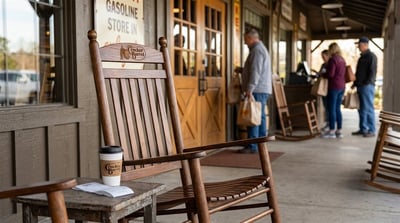
But Cracker Barrel Old Country Store (NASDAQ: CBRL) completely shattered that bearish consensus.
Hey, it's Jon Najarian. The SpaceX IPO is right around the corner. But I discovered Elon may have something BIGGER planned. Check this out before June 12th... (Ad)
After being invited to the SpaceX launch headquarters in Cape Canaveral from one of Elon's top lobbyists… Hall of Fame Trader Jon Najarian now says EVERYONE is missing an even bigger story about the SpaceX IPO… That it's just the start of an Elon Musk $44 trillion "Superconvergence…" An event that could kick off as soon as June 12th.
Click here now to watch hall of fame trader Jon Najarian's full prediction.By executing a disciplined margin defense and implementing structural changes to business operations, the company triggered a major fundamental revaluation. While it did not fully erase industry pressures, it gave investors something they had not seen from the company in a while: evidence that its turnaround is gaining traction.
The narrative surrounding Cracker Barrel is no longer about merely surviving economic pressure, but about systematically building profitability. The question now is whether the company can turn one strong quarter into a more durable recovery.
Serving Up Profits in a Foot Traffic Famine
Cracker Barrel's third-quarter earnings report caught Wall Street completely off guard.
The company reported adjusted earnings per share of 29 cents, crushing the analyst consensus estimate of a 45-cent loss.
Revenue of $797.37 million comfortably exceeded the $776.69 million projection, even with a 2.9% year-over-year (YOY) decline in top-line sales.
Understanding this quarter's financial success requires looking beyond revenue and focusing on margin expansion.
Restaurant traffic fell 6.7%. In the high-fixed-cost restaurant sector, a traffic decline of that magnitude typically puts profitability under pressure. Fixed costs like rent, utilities, and salaried management can quickly eat into shrinking revenues.
Instead of falling victim to this dynamic, Cracker Barrel delivered a solid improvement in operating expense leverage. Restaurant cost of goods sold actually fell 10 basis points to 26.1% of sales.
Evaluating Cracker Barrel's core business requires separating true operational execution from one-time balance-sheet events. Cracker Barrel secured a $47.4 million cash infusion from an interchange fee litigation settlement. This settlement artificially inflated GAAP earnings per share to $1.90. The adjusted 29-cent-per-share figure strips out this legal windfall, revealing a healthier underlying operation that does not rely on one-time cash injections to generate sustainable profits.
Upselling Comfort Food for Maximum Margins
Navigating a pressured consumer environment requires pricing discipline.
Cracker Barrel effectively deployed a barbell pricing strategy—anchoring both ends of the consumer spending spectrum—to extract higher margins from a static customer base. While foot traffic declined, the average check size increased by 4.3%.
Cracker Barrel preserved sharp entry price points, such as a $7.99 Sunrise Pancake Special, to retain highly price-sensitive guests. Keeping affordable items on the menu ensures budget-conscious diners still walk through the doors. At the same time, store operators successfully pushed profitable add-ons, shareable appetizers, and premium proteins to guests with higher discretionary income.
Overall menu pricing increased 4.4%, successfully outpacing 2.5% commodity inflation and 2.0% hourly wage inflation. With an average check of $15.85, Cracker Barrel substantially undercuts the $19 family dining and $27 casual dining industry averages. This aggressive value proposition positions Cracker Barrel well to capture consumers trading down from more expensive restaurant tiers.
The Secret Sauce: AI, Loyalty and Merchandise
Sustaining margin expansion requires structural changes to the underlying business model. The operational turnaround at Cracker Barrel is supported by integrated efforts spanning consumer loyalty, retail merchandising, and backend technology.
The core demographic's underlying strength gives Cracker Barrel a significant competitive moat. Its nearly 12-million-member loyalty program accounted for more than 40% of tracked sales during the quarter. This high-value cohort is actively returning and absorbing price hikes, demonstrating that Cracker Barrel can exercise pricing power without destroying brand loyalty.
The retail segment delivered another significant fundamental surprise, outperforming restaurant comparable sales for the first time in over four years. Retail acts as a high-margin secondary revenue stream that leverages existing real estate and foot traffic. Driven by aggressive SKU rationalization and optimized markdowns, retail average unit retail and units per transaction both expanded. Targeted merchandising, specifically the American Heritage product line and trending sensory toys, resonated strongly with consumers. The willingness of guests to purchase retail items after a meal suggests that discretionary spending capacity remains intact among Cracker Barrel's core demographic.
AI Helps Cracker Barrel Manage Labor Pressure
Labor remains the most significant variable cost for any hospitality operator. To help offset 2% hourly wage inflation, Cracker Barrel deployed enterprise-wide artificial intelligence (AI) tools. By utilizing machine learning models for traffic forecasting, store managers optimized labor deployment down to the hour.
Predicting rush periods can reduce costly overstaffing during slow hours and protect the guest experience by preventing understaffing during peak volume. This technological cost containment helped mitigate wage inflation and contributed heavily to the sharp improvement in operating leverage.
Cracker Barrel is proving that legacy brands can successfully integrate advanced technology to solve physical-world margin problems.
The Divided Verdict on Country Dining
The decisive earnings beat gives the current executive team more credibility against long-running activist pressure.
Biglari Capital has waged multiple proxy contests targeting board composition and strategic missteps. Expanding margins and raising forward guidance helps neutralize the activist narrative that current leadership is mismanaging Cracker Barrel.
Wall Street remains deeply divided on the future trajectory of Cracker Barrel.
Following the earnings release, Wells Fargo upgraded Cracker Barrel to Overweight and raised its price target to $50, citing validation of the ongoing strategy and a compelling valuation multiple.
Conversely, Citigroup maintained a Sell rating while raising its price target to $34, and Benchmark reiterated a Hold rating.
This divergence in analyst sentiment presents a clear opportunity for investors who understand the underlying fundamental metrics. Institutional bears exited positions rapidly, which created structural upside. With Cracker Barrel still heavily shorted, a better-than-expected quarter can intensify volatility as bearish positioning adjusts.
Signaling confidence in sustained forward cash flow, the company declared a 25-cent quarterly dividend payable on August 12. Maintaining this yield while carrying a 2.83 total debt leverage ratio requires highly predictable free cash flow generation.
The most bullish indicator came from the revised fiscal 2026 outlook. Full-year adjusted EBITDA guidance was raised to between $120 million and $125 million, up significantly from the prior $85 million to $100 million range.
Why Cracker Barrel Just Set the Standard
Cracker Barrel's recent upside breakout serves as a masterclass in fundamental margin defense. It also shows how quickly sentiment can change when a struggling consumer brand delivers better cost control, targeted pricing, and early evidence of operational progress. The quarter did not solve every problem, but it did show that management has more levers to pull than bears expected.
Cracker Barrel offset a 6.7% traffic decline with strategic pricing, technological labor optimization, and retail outperformance, demonstrating a resilient business model.
However, the turnaround is not finished. Traffic remains negative, adjusted EBITDA declined YOY, and the company faces a tougher Q4 comparison. That makes the next few quarters critical for confirming whether this was a one-quarter relief rally or the start of a more durable operating recovery.
Cracker Barrel now looks less like a broken legacy restaurant brand and more like a high-risk turnaround story with measurable progress. Investors monitoring the consumer discretionary sector may want to watch whether other legacy operators can show similar pricing power, cost discipline, and customer loyalty before deciding whether the risk/reward is attractive.
This email is a sponsored message sent on behalf of Awesomely, LLC, a third-party advertiser of InsiderTrades.com and MarketBeat.
If you no longer wish to receive these emails, unsubscribe here.
If you have questions or concerns about your subscription, don't hesitate to contact MarketBeat's U.S. based support team at contact@marketbeat.com.
If you no longer wish to receive email from InsiderTrades.com, you can unsubscribe.
Copyright 2006-2026 MarketBeat Media, LLC. All rights reserved.
345 N Reid Pl., Suite 620, Sioux Falls, SD 57103. United States..


